
Home Aquariums
YuzhaLink Wi-Fi Water Leak Sensor
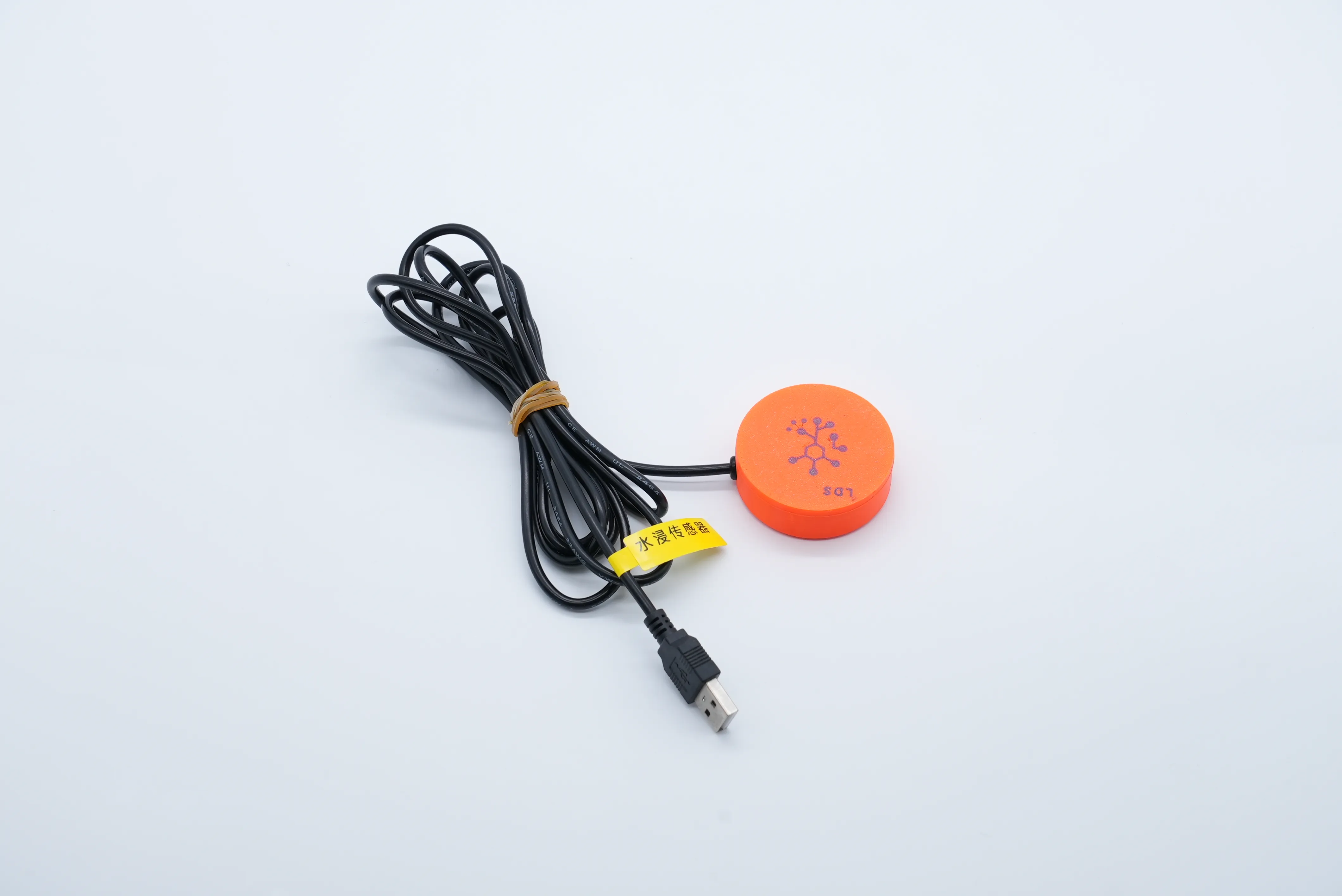
The YuzhaLink Wi-Fi Water Leak Sensor watches the places where aquarium water actually escapes: the cabinet under the tank, the floor around a sump, an equipment bay, the joints in a pipe run, and wh…
Highlights
- Triggers on about 1 mm of standing waterDetection is by liquid conductivity: conductive water bridging the sensor's two metal probes puts it into a leak state. Roughly 1 mm is enough, so the trigger point is a film spreading across a cabinet floor rather than a pool deep enough to notice on your own.
- Alerts and automations, not just a local noiseA detected leak reaches YuzhaLink as a remote alert and can also drive automation linkage, so the response is not limited to somebody being in the room to hear it. The leak state becomes a signal the rest of the system can act on.
- No controller, no long sensor runThe sensor connects to YuzhaLink directly over 2.4GHz Wi-Fi and needs only a DC 5V supply within reach of where it sits. There is no main controller to install first and no signal cable to route back to a hub, so placement is decided by where water would collect rather than by cable length.
- The sensor can sit in water; the plug end cannotThe sensor body and its sealed lead-out cable are potted and rated for immersion, which is what a device lying on a cabinet floor eventually has to survive. The USB plug, the 5V supply and the power connection point must be kept dry and splash-free — and the 12-month limited warranty draws the same line, covering normal immersion of the body while excluding water at the plug end.
- Stated detection limits, not implied onesConductivity-based detection depends on the liquid conducting. Very low-conductivity liquids, purified water among them, can reduce sensitivity — recorded here rather than left for a buyer to discover, so the sensor is placed where its detection method actually applies.
Specifications
| Parameter | Specification |
|---|---|
| Detection Principle | Liquid conductivity detection |
| Trigger Depth | About 1 mm |
| Suitable Liquid | Water carrying some conductivity |
| Remote Functions | Leak alerts and automation linkage |
| Wireless Connection | 2.4GHz Wi-Fi, connects directly to YuzhaLink |
| Power | DC 5V |
| Diameter | About 40 mm |
| Immersible Parts | Sensor body and sealed lead-out cable |
| Must Stay Dry | USB plug, 5V supply and power connection point |
| Warranty | 12 months |
| Shape | Round |
| Lead Length | 2 m |
| BLE Use | Device provisioning only |
| Deployment | Powered locally, no controller required |
| Detection Limits | Low-conductivity liquids such as purified water may reduce sensitivity |
| Typical Applications | Aquarium base cabinet, around the sump, equipment bays, near pipe joints and low points on the floor |
About this product
The YuzhaLink Wi-Fi Water Leak Sensor watches the places where aquarium water actually escapes: the cabinet under the tank, the floor around a sump, an equipment bay, the joints in a pipe run, and whatever low spot the floor drains toward. It is a round puck about 40 mm across on a 2 m lead, meant to be put down once and then forgotten about.
Detection is by liquid conductivity. When conductive water bridges the sensor's two metal probes, it enters a leak state and YuzhaLink raises the alert. It takes roughly 1 mm of standing water to do that — a film rather than a flood, which is the difference between finding out now and finding out later.
Because detection depends on the liquid conducting, the sensor is explicit about its limits: liquids of very low conductivity, purified water among them, can reduce sensitivity. What it is specified for is water carrying some conductivity.
The sensor joins YuzhaLink over 2.4GHz Wi-Fi by itself. There is no controller to buy first and no long sensor cable to route back to a hub — it needs a DC 5V supply within reach of wherever it sits, and that is the whole installation. Bluetooth is used only to get it onto the network during setup, never as the working link. Once it is on, a detected leak does more than notify: it can drive automations alongside the rest of the system.
The sensor body and its sealed lead-out cable are potted, so the part that lives on a cabinet floor is built to be wet. The USB plug, the 5V supply and the point where power is connected are not: those belong somewhere dry and splash-free. The 12-month limited warranty is written along the same line — normal immersion of the sensor body and its sealed lead is not an exclusion, while water reaching the plug end is.