
1 Review
1.1 UAS and ATS
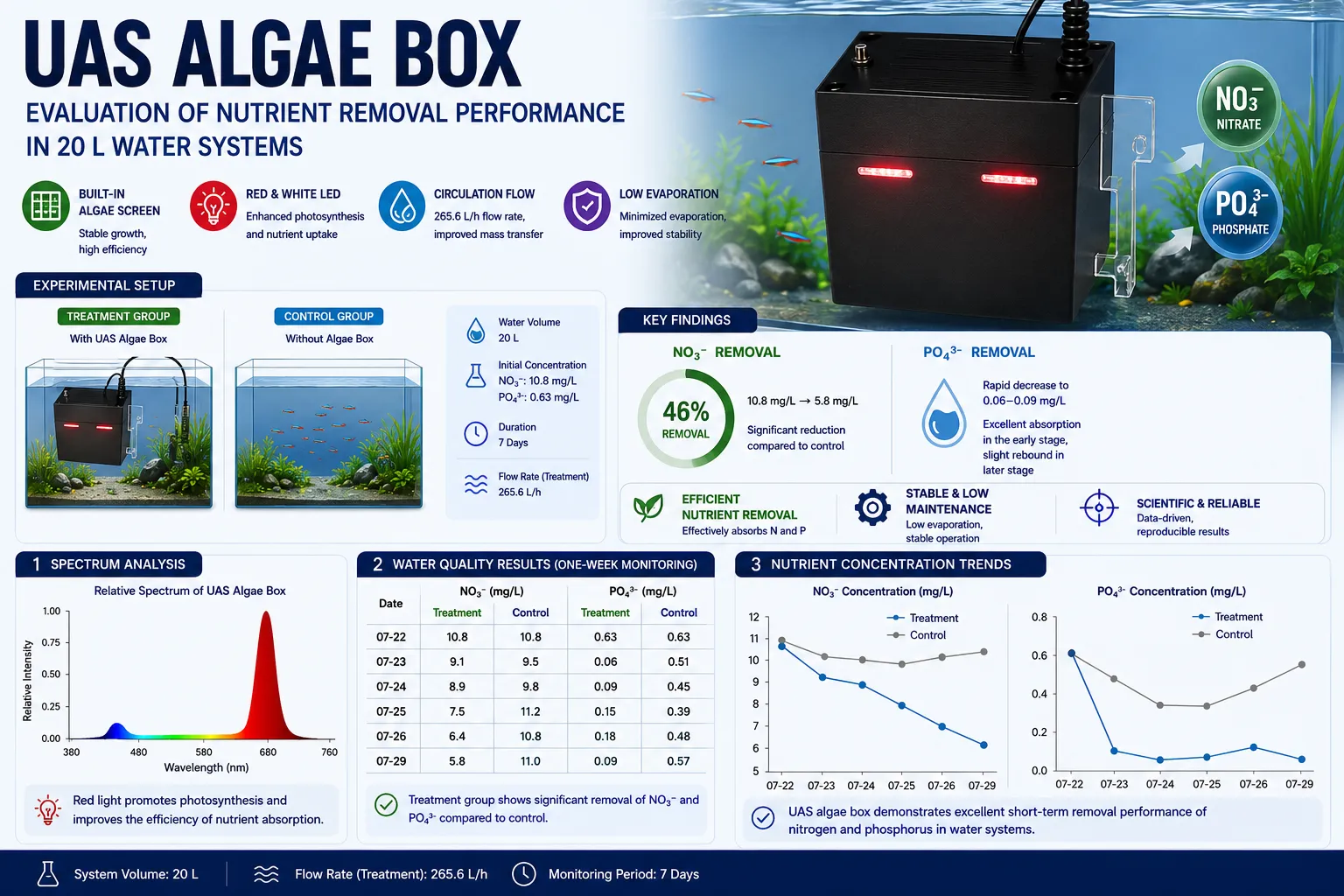
The UAS(Upflow Algae Scrubber) adopts an internal algae screen as the attachment substrate to immobilize algae inside the unit, allowing algal growth under relatively stable light and aqueous conditions. Unlike conventional ATS(Algal Turf Scrubber) systems, algal biomass within the UAS algae scrubber remains largely submerged. Water circulates around the algae screen, resulting in low water evaporation and uniform light incidence across all sides of algae, which improves light‑utilization homogeneity.
By contrast, the ATS system relies primarily on water flowing over the top surface of algal attachments. Algae colonize flowing media surfaces, and light availability is subject to surface exposure, which frequently causes uneven illumination and heterogeneous algal growth layers. UAS units are commonly equipped with integrated red‑and‑white LED arrays that directly illuminate the algae screen, whereas ATS mostly depends on external or overhead lighting. Accordingly, UAS algae scrubbers exhibit certain advantages in light utilization, evaporation control and algal biomass stability.
1.2 Effects of Red Light on Algae
Red light constitutes a critical spectral region for algal photosynthesis, and exhibits particularly high absorption efficiency for green algae containing chlorophyll‑a and carotenoids. Characterized by long wavelength and strong penetration capacity, red light can maintain favorable light intensity within relatively deep water layers, enabling algae to acquire usable light energy even under thick water columns. For numerous microalgal species, red light accelerates photosynthetic rates, facilitates biomass accumulation, and promotes pigment synthesis, elevating the cellular proportions of chlorophyll and carotenoids. Furthermore, red light is widely recognized to enhance photosynthetic carbon fixation and dry‑matter accumulation in algae, thereby improving the uptake efficiency of nitrogen and phosphorus. Overall, red light delivers desirable performance in terms of algal proliferation and energy conversion, making it especially suitable for UAS algae scrubber systems that demand high light‑use efficiency and deep‑layer illumination.
1.3 Experimental Objectives and Significance
This experiment was designed to systematically evaluate the removal efficiencies of nitrate ( NO₃⁻) and phosphate (PO₄³⁻ ) by a UAS algae scrubber within a 20 L water volume, through comparison between the experimental group equipped with the UAS unit and the control group without the scrubber. The study verifies its remediation capacity for nitrogen‑phosphorus eutrophication under practical aquatic conditions.
The significance of this work lies in two aspects. First, it supplements empirical performance data for commercial UAS algae scrubber products, and clarifies the contributions of its integrated algae screen, red‑light illumination and circulating‑water flow design to algal nutrient‑uptake efficiency. Second, it provides references for applications including aquarium husbandry and ecological restoration, and helps assess whether such devices can achieve stable nitrogen‑phosphorus removal and long‑term operation while lowering water evaporation and improving algal light‑utilization efficiency.
2 Materials and Methods
2.1 Experimental Materials and Instruments
One set of UAS algae scrubber unit, 30 × 30 × 30 cm aquarium, potassium nitrate(KNO₃), potassium dihydrogen phosphate(KH₂PO₄), pure water, commercial test kits for NO₃⁻and PO₄³⁻ , HACH water quality analyzer, and illuminance meter.
2.2 Experimental Procedures
The spectral distribution of the UAS algae scrubber was measured using an illuminance meter. Two 30 × 30 × 30 cm aquariums were prepared and assigned as the experimental group and control group, respectively. Nutrient stock solution was prepared with KNO₃ and KH₂PO₄ to yield initial concentrations of 10.8 mg/L for nitrate (NO₃⁻) and 0.63 mg/L for phosphate (PO₄³⁻).
The experimental group was fitted with a fully‑colonized UAS algae scrubber, which had been pre‑rinsed with the prepared test water prior to the experiment. The actual measured flow rate of the water pump was 265.6 L/h. No algae scrubber was installed in the control group. Each aquarium received 20 L of the prepared test solution. Concentrations of NO₃⁻ and PO₄³⁻ were monitored daily to compare nutrient removal performance between the two groups.
3 Results
3.1 Spectral Measurement
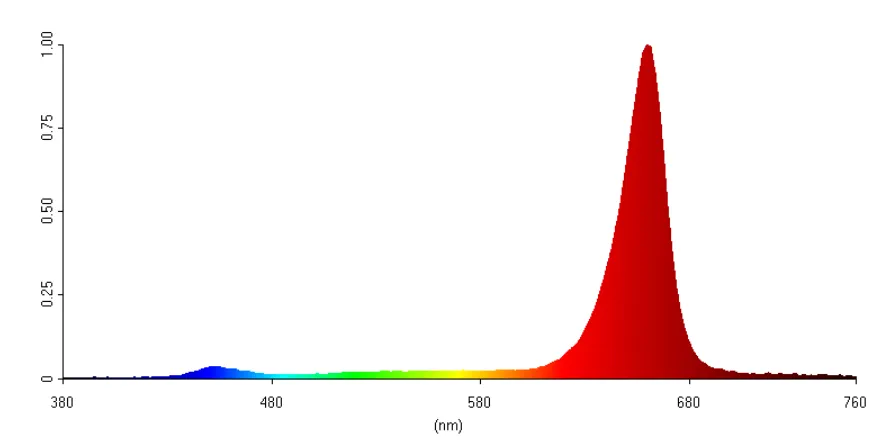
Figure 1. Relative spectral distribution of the UAS algae scrubber.
3.2 Water Quality Monitoring
Table 1. Concentrations of NO₃⁻ and PO₄³⁻ in experimental and control groups during the one‑week monitoring period
Date | NO₃⁻ treatment (mg/L) | NO₃⁻ control (mg/L) | PO₄³⁻ treatment (mg/L) | PO₄³⁻ control (mg/L) |
|---|---|---|---|---|
07-22 | 10.8 | 10.8 | 0.63 | 0.63 |
07-23 | 9.1 | 9.5 | 0.06 | 0.51 |
07-24 | 8.9 | 9.8 | 0.09 | 0.45 |
07-25 | 7.5 | 11.2 | 0.15 | 0.39 |
07-26 | 6.4 | 10.8 | 0.18 | 0.48 |
07-29 | 5.8 | 11.0 | 0.09 | 0.57 |
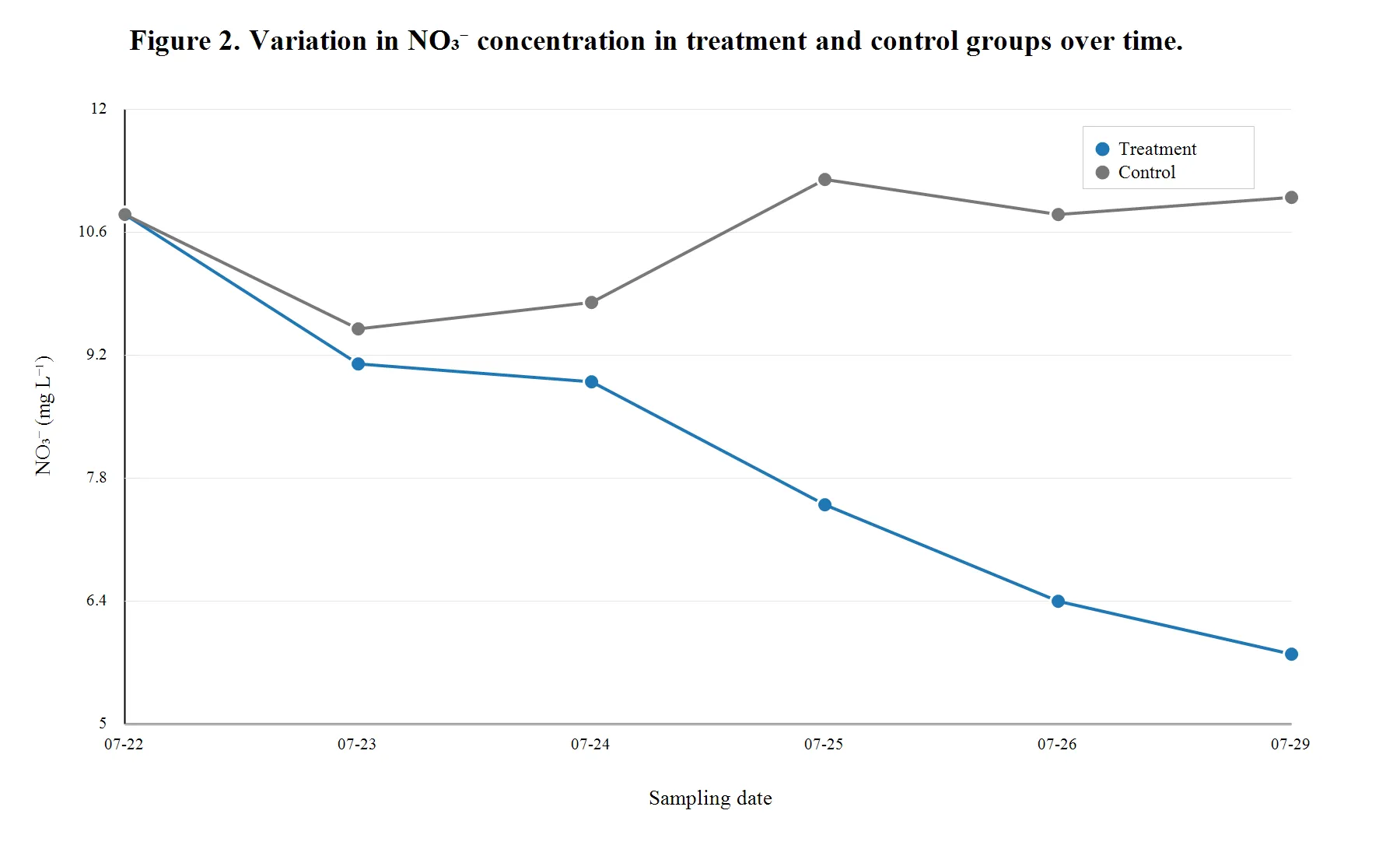
Figure 2. Temporal variations in nitrate concentrations for the experimental and control groups
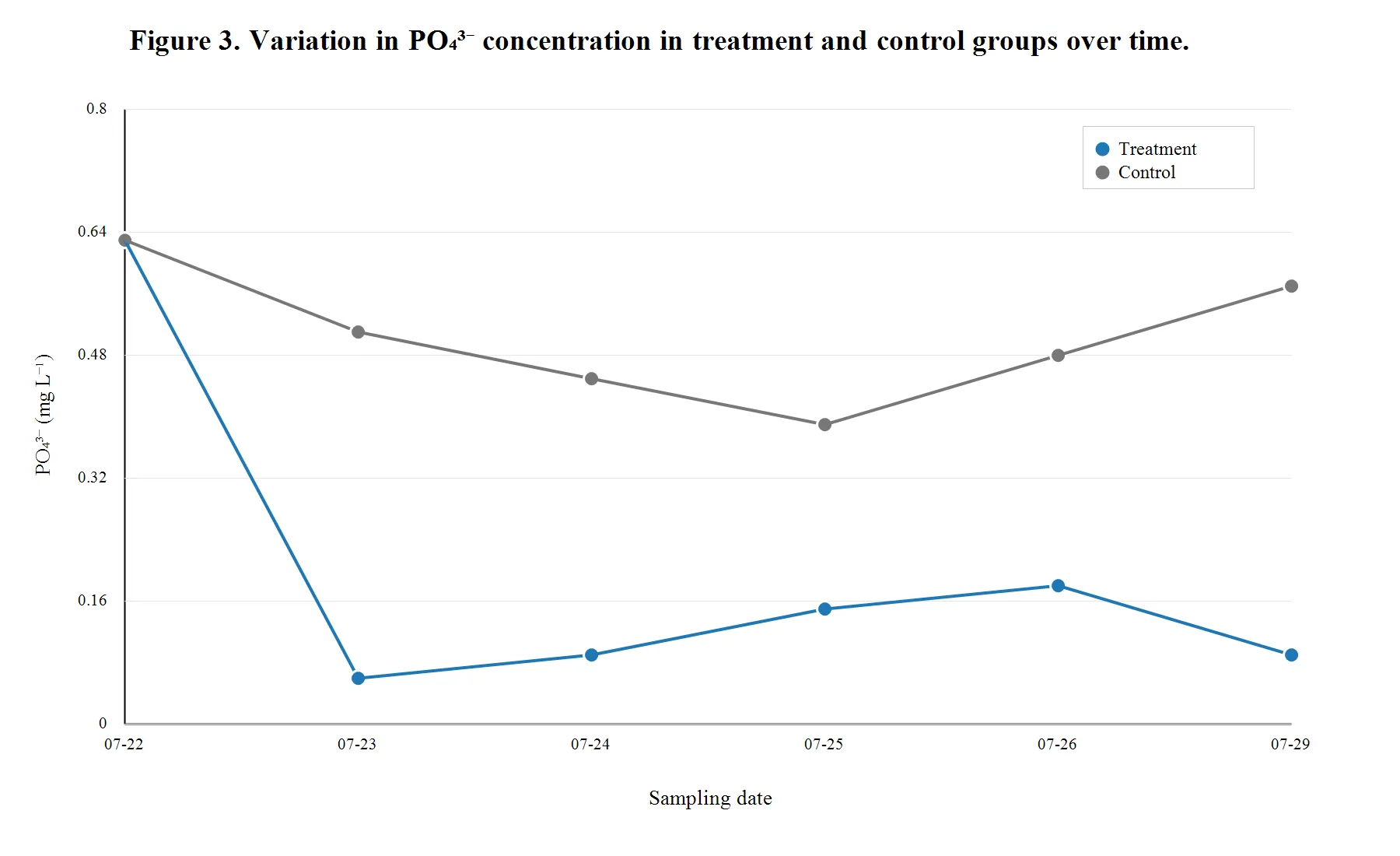
Figure 3. Temporal variations in phosphate concentrations for the experimental and control groups
4 Discussion
This study evaluated the short‑term removal performance of a UAS algae scrubber equipped with an internal algae screen for nitrate and phosphate in a small‑scale 20 L water system. As shown in Table 1, Figure 2 and Figure 3, nitrate concentrations in the experimental group decreased from 10.8 mg·L⁻¹ to 5.8 mg·L⁻¹, corresponding to a removal efficiency of approximately 46%. In contrast, no comparable decreasing trend was observed in the control group, indicating that nitrogen assimilation via photosynthesis by algal biomass within the scrubber serves as the primary removal pathway.
Phosphate in the experimental group declined rapidly, reaching a minimum of 0.06–0.09 mg·L⁻¹ at the early experimental stage, followed by a slight rebound. This phenomenon is likely attributed to phosphorus release originating from the decomposition of algal detritus or surface sediments when the algae screen becomes over‑densely colonized.
Several design features of the UAS contribute to improved nutrient‑removal efficiency. The built‑in algae screen provides a stable microenvironment for attached algal growth. Red‑light illumination and circulating water flow enhance light‑utilization efficiency and nutrient mass‑transport. Low water‑evaporation loss further stabilizes water volume and solute concentrations. Meanwhile, the applied pump flow rate of 265.6 L/h helps compress the nutrient boundary layer and facilitates mass‑exchange between algal biomass and bulk water. Accordingly, the pronounced nitrate reduction and short‑term phosphate uptake observed in this experiment are consistent with the coupled light‑flow mechanism and attached‑growth mode of the UAS system.
Based on these findings, regular harvesting or intermittent cleaning strategies are recommended for practical applications to prevent nutrient re‑release caused by over‑densified algae screens and accumulated algal detritus. The present experiment demonstrates that the UAS algae scrubber possesses considerable short‑term potential for nitrogen and phosphorus removal. Nevertheless, long‑term stable operation requires proper algal biomass management and a comprehensive monitoring framework to avoid secondary nutrient release and sustain consistent remediation performance.