

Author
Xylon
Lab technician at YuzhaLab and a researcher in aquarium technology. Focuses on hands-on, measurement-based aquarium experiments explained for a general audience, grounded in controlled trials and instrument testing across water chemistry, equipment performance, planted-tank ecology, and smart aquarium systems. Takes nothing on faith from received internet wisdom, using reproducible data to show how a tank actually behaves, and writes technical explainers for aquarium hobbyists.
Writing
Published stories

7 Aquarium Parameters You Should Monitor Daily
Five-minute daily checks of temp, pH, salinity, dissolved oxygen, ATO, ammonia and equipment prevent tiny issues turning deadly.
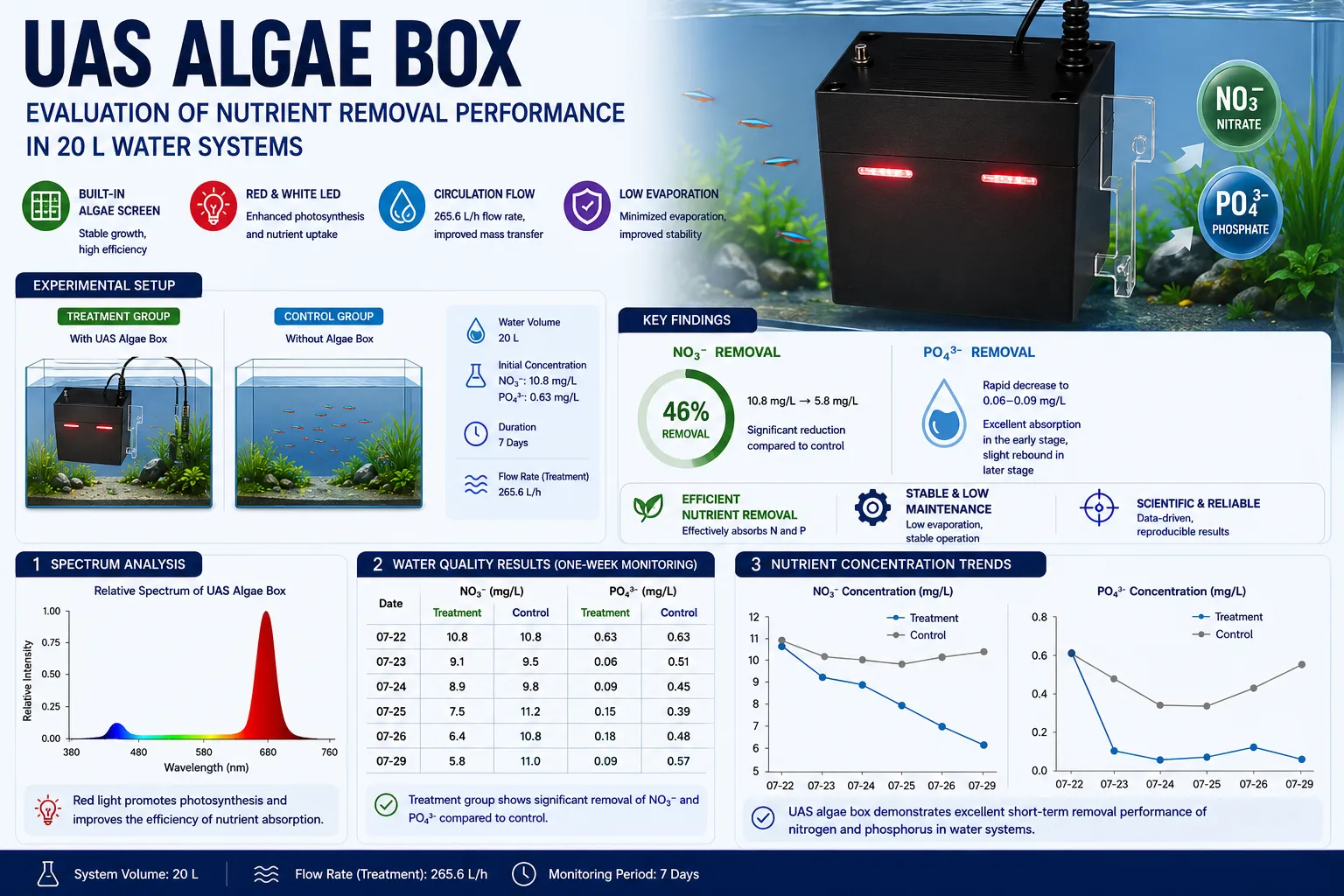
Nitrate and Phosphate Removal by a UAS Algae Box in a 20 L System
A UAS algae box — an enclosed algae scrubber with internal algae screens and its own LED lighting — was run against a no-box control in matched 20 L tanks for one week. Nitrate in the treatment tank fell from 10.8 mg/L to 5.8 mg/L, about 46%, while the control drifted between 9.5 and 11.2 mg/L with no downward trend. Phosphate fell much faster, from 0.63 mg/L to 0.06 mg/L within a day, then drifted back up to 0.18 mg/L mid-week before easing to 0.09 — most likely phosphorus released as algal debris and surface deposits broke down. The practical consequence is that the screens have to be harvested on a schedule: left to accumulate, the box begins returning nutrients it removed earlier. One treatment tank and one control, six sampling points across seven days, and a single pump flow of 265.6 L/h — trend data, not a validated removal rate.
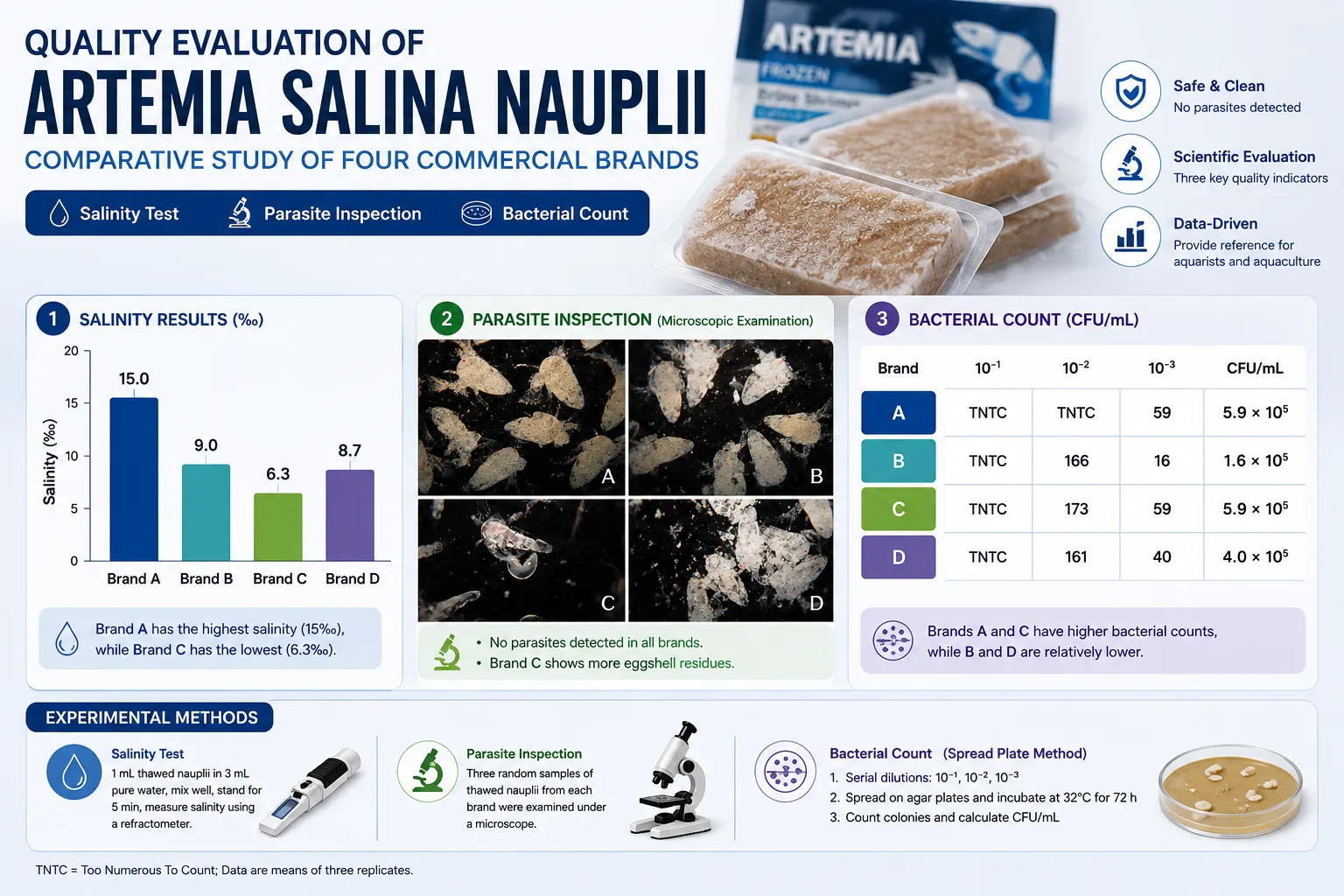
Comparative Evaluation of Artemia salina Nauplii from Four Commercial Brands: Salinity, Parasites and Bacterial Load
Four commercial brands of Artemia salina nauplii were tested for salinity, parasites and bacterial load. No parasites were found in any brand, so the basic sanitary claims hold up. But every brand carried bacteria of the same order of magnitude — from 1.6×10⁵ CFU/mL for the lowest to 5.9×10⁵ CFU/mL for the highest — suggesting that "fully disinfected" marketing does not survive storage and transport. Salinity varied more than expected, from 15‰ down to 6.3‰, and the lowest-salinity brand also showed heavy chorion residue and visible blank ice, pointing to high water content and incomplete processing. At the dilution actually used when feeding, the salt added to tank water is negligible. Three replicates per brand, cultivable bacteria only, and brands are anonymised as A–D.
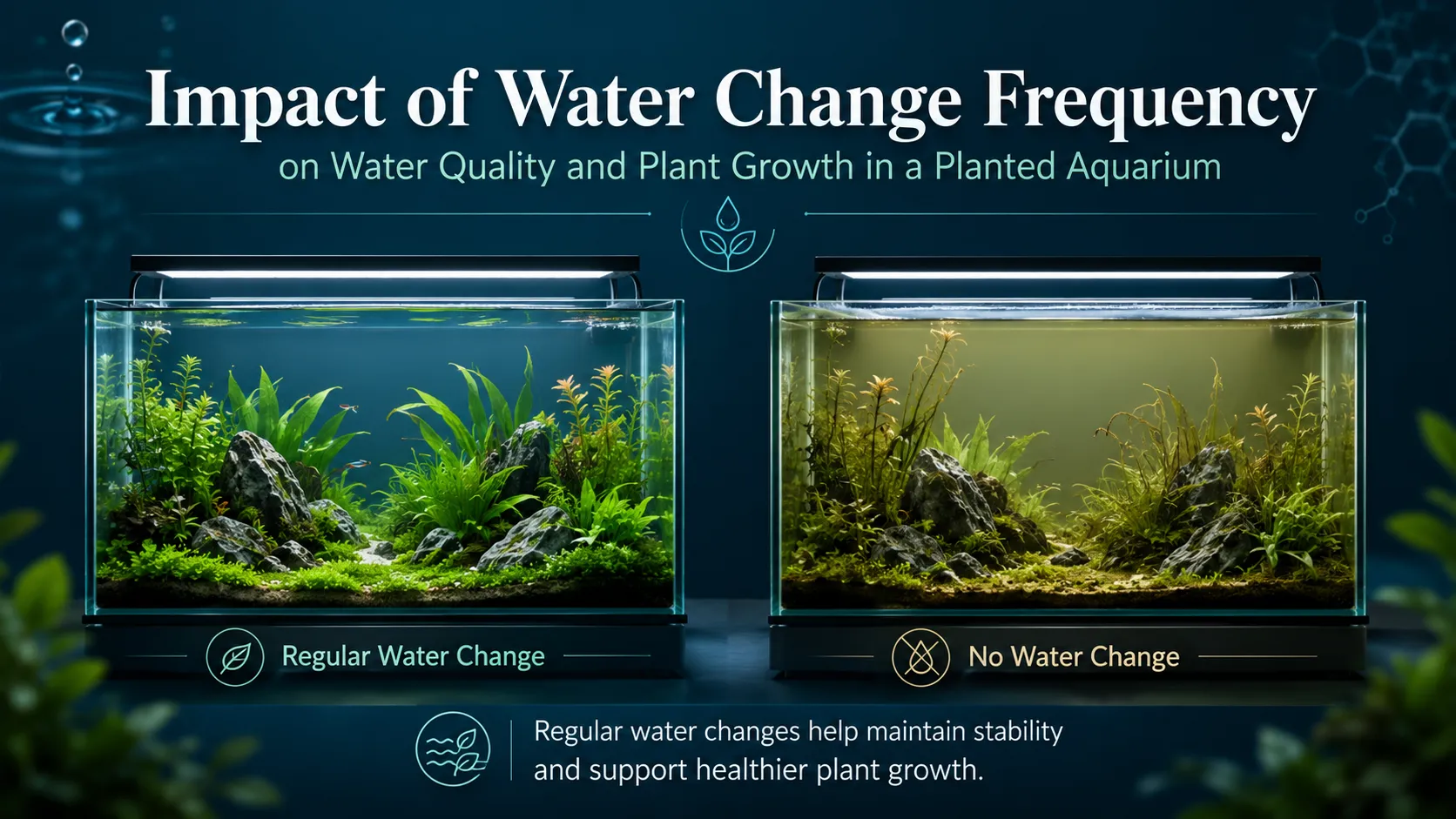
Effects of Water Exchange Frequency on Water Quality and Aquatic Plant Growth in Planted Tanks
Two identical 30 cm planted tanks ran for eight weeks under matched light, feeding and filtration — one given a one-third water change every seven days, the other none at all. pH, nitrate and TDS tracked each other closely in both. Phosphate did not: it climbed from 1.55 to 4.18 mg/L without water changes, against a 3.56 mg/L peak that fell away after week 5 with them, and the untouched tank's water yellowed visibly from week 4. Brown algae and black beard algae appeared in both, at much the same time and coverage. Most plants changed little either way, though Rotala macrandra grew better in the tank receiving changes. Over eight weeks the unchanged tank did not settle into a more stable system than the maintained one. One tank per treatment (n=1), so these are descriptive trends, not statistically general conclusions.
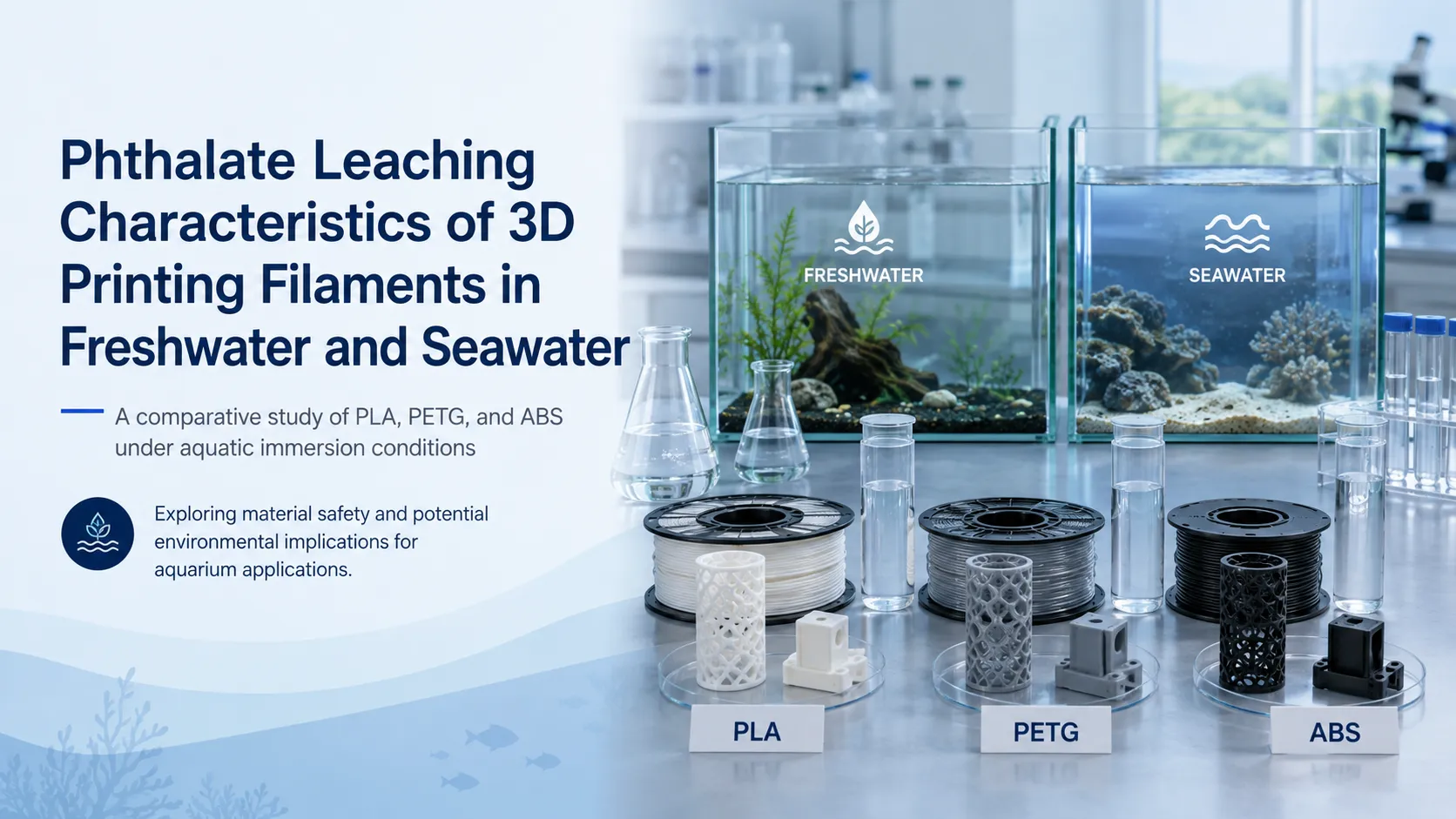
Study on Leaching Characteristics of Phthalates from 3D Printing Filaments in Freshwater and Seawater
A laboratory study of phthalate leaching from three common 3D printing filaments — PLA, PETG and ABS — after 10 days of static immersion in freshwater and artificial seawater. Of the four target compounds (DMP, DEP, DBP and DOP), only DOP was detected, at 0.019–0.026 mg·L⁻¹ — including in the blank controls, which points to background contamination rather than release from the filaments. Under these short-term conditions no remarkable release of the target phthalates was observed; longer-term, multi-condition testing and further methodological validation are still required.