
1 Objectives and Significance
A prevalent concern in planted aquarium cultivation is whether aquariums without long-term water exchange can spontaneously reach a stable ecological equilibrium. To investigate the impacts of water replacement as an external disturbance on water nutrient dynamics, algal assemblages and aquatic plant growth, two treatments were established in this experiment: weekly replacement of one-third of the water volume and zero water exchange. With illumination, feeding and filtration conditions kept identical across groups, routine physicochemical parameters and qualitative ecological observations were continuously recorded over an 8-week monitoring period.
2 Materials and Methods
- Experimental Apparatus:Standard 30 cm planted aquariums, waterfall filters, aquatic plant LED lights, Hach water quality analyzer.
- Organisms and Aquascape Setup:Identical substrate materials were used in both tanks, together with the same species and quantity of core aquatic plants, including Limnophila sessiliflora, Rotala macrandra, Rotala rotundifolia and Eleocharis parvula. A small number of ornamental shrimp and fish (Neocaridina davidi var. Royal Blue) were introduced into each aquarium. The aquascape layout, vegetation coverage and organism density were standardized between the two groups to minimize initial experimental discrepancies.
- Treatments and Experimental Duration:For the experimental group (weekly water change group), approximately one-third of the aquarium water volume was renewed every seven days. The control group (zero water change group) received no water replacement throughout the whole monitoring period. The total experimental observation lasted for 8 weeks.
- Measured Parameters and Sampling Frequency:pH, total dissolved solids (TDS), nitrate (NO₃⁻) and phosphate (PO₄³⁻) concentrations were measured weekly. Simultaneous qualitative records were maintained regarding algal growth, visual water color, and the growth status of aquatic plants.
3 Results
Table 1 Water quality monitoring data of the weekly water change group
Time (Week) | 0 | 1 | 2 | 3 | 4 | 5 | 6 | 7 | 8 |
|---|---|---|---|---|---|---|---|---|---|
pH | 7.71 | 7.79 | 7.67 | 7.75 | 7.86 | 8.09 | 7.98 | 8.06 | 8.05 |
NO₃⁻(mg/L) | 0.5 | 0.3 | 0.2 | 0.7 | 0.7 | 0.8 | 0.6 | 1.3 | 1.0 |
PO₄³⁻(mg/L) | 1.56 | 2.70 | 2.80 | 3.21 | 3.46 | 3.56 | 2.84 | 3.18 | 2.86 |
TDS(ppm) | 280 | 261 | 253 | 276 | 285 | 303 | 280 | 273 | 268 |
Table 2 Water quality monitoring data of the zero water change group
Time (Week) | 0 | 1 | 2 | 3 | 4 | 5 | 6 | 7 | 8 |
|---|---|---|---|---|---|---|---|---|---|
pH | 7.82 | 7.47 | 7.77 | 7.65 | 7.83 | 7.82 | 7.91 | 7.84 | 7.87 |
NO₃⁻(mg/L) | 0.7 | 0.0 | 1.6 | 1.2 | 0.5 | 0.8 | 1.0 | 0.6 | 1.0 |
PO₄³⁻(mg/L) | 1.55 | 2.69 | 3.14 | 3.62 | 3.72 | 3.50 | 3.78 | 4.02 | 4.18 |
TDS(ppm) | 274 | 253 | 250 | 275 | 275 | 295 | 291 | 292 | 300 |
Figure 1 Aquascape status of weekly water change group at week 4
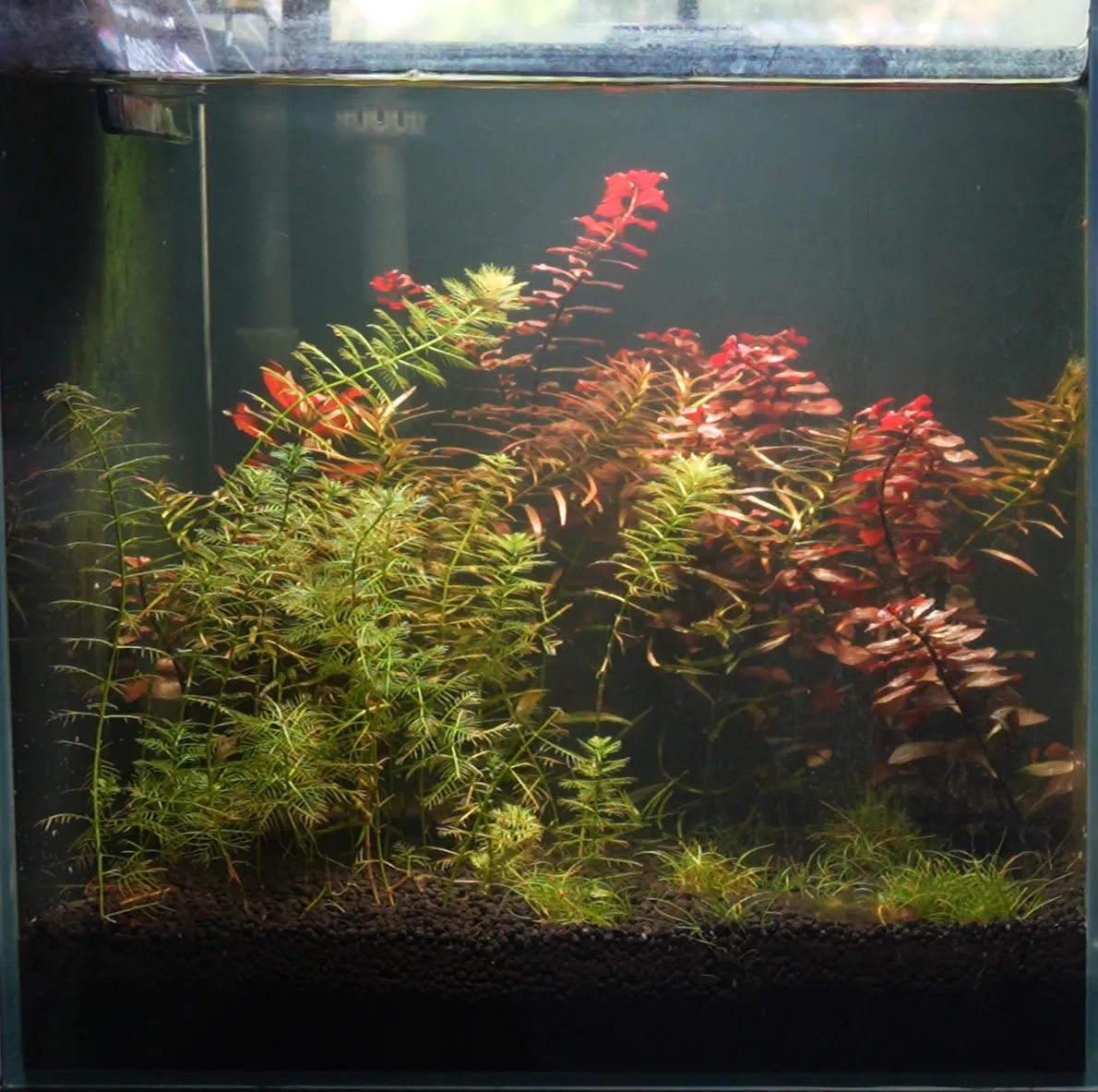
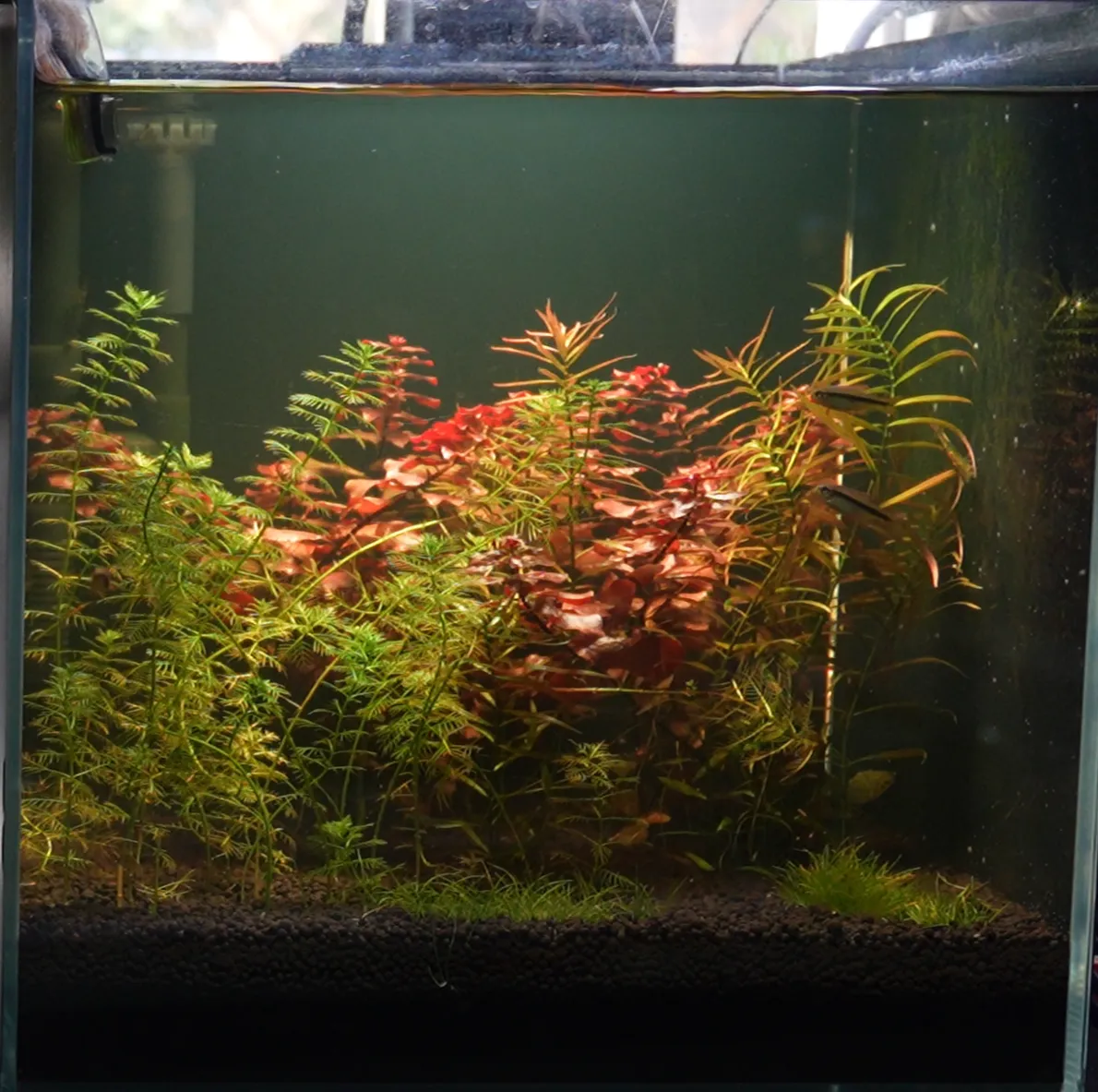
Figure 2 Aquascape status of zero water change group at week 4
In terms of water quality, phosphate concentrations exhibited an increasing trend in both groups, yet the magnitude of elevation and final concentration in the zero water exchange group were markedly higher (rising from an initial value of approximately 1.55 mg/L to 4.18 mg/L). By contrast, phosphate levels in the weekly water exchange group declined moderately starting from Week 5.
For pH, nitrate and TDS values, the overall fluctuation ranges were comparable between the two treatments, with no obvious intergroup differences detected.
Visual and algal observations revealed that yellowish water discoloration became more prominent in the zero water exchange group from Week 4 onward. Brown algae, black beard algae and other algal species emerged in both aquariums, with little divergence in their onset time and visual coverage area.
4 Discussion
1) Nutrient accumulation and the function of water exchange:The experimental results confirm that regular water replacement can mitigate phosphate accumulation to a certain extent and thereby slow the progression of water eutrophication. When phosphorus acts as the limiting nutrient, its continuous buildup generally stimulates algal propagation and alters water color. The intensified yellowish discoloration observed in the zero water exchange group corresponded well with its elevated PO₄³⁻ concentrations. No consistent significant differences in pH, nitrate and TDS were found between the two treatments. This indicates that under the short experimental duration and fixed biological load of this trial, these parameters are barely affected by water exchange, or co-regulated by multiple biogeochemical processes including plant uptake, nitrification/denitrification and light conditions.
2) Algal growth and ecological equilibrium:This study tested the hypothesis that planted aquariums could develop stable self-sustaining ecosystems without long-term water exchange. Over the 8-week monitoring period, the zero water exchange group failed to establish a more balanced aquatic system than the weekly water exchange group. Instead, severe phosphate accumulation and deteriorated water color occurred in the non-replaced tank, demonstrating that ecological self-stabilization was not achieved within the experimental timeframe.
3) Limitations and future research perspectives:Each treatment only contained a single aquarium replicate (n=1). Accordingly, the obtained results merely illustrate descriptive trends under specific experimental conditions, rather than statistically significant universal conclusions. Several potential confounding variables were not separately quantified in this work, such as the purification efficiency of filter biofilms, chemical buffering capacity of substrate and succession of microbial communities. Future investigations should incorporate more biological replicates and multivariate statistical analysis to quantitatively clarify the relative contribution of each factor to water quality stability.