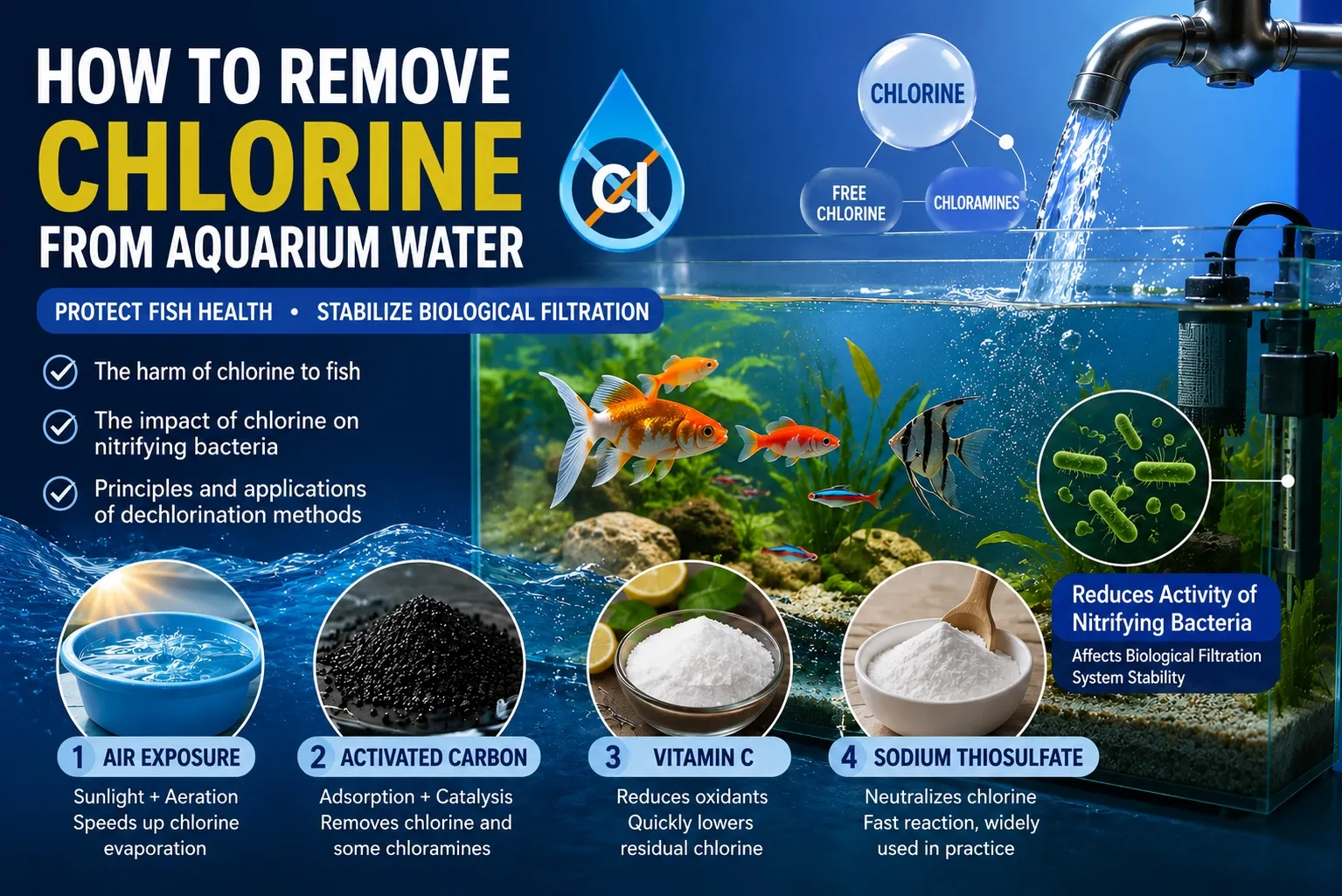
Tap water leaves the treatment plant carrying at least 0.3 mg/L of residual chlorine and reaches the end of the distribution network at 0.05 mg/L or more — enough to damage fish gills and to inhibit ammonia-oxidising bacteria, the part of the nitrification system least able to spare them. This article reviews that harm, then measures how quickly three approaches actually clear it. Activated carbon was by far the quickest: 200 g in 36 L took residual chlorine from 0.61 mg/L to zero in 35 minutes. Standing under indoor light alone was the slowest — three samples starting near 0.58 mg/L still held 0.02 mg/L after 4 hours 38 minutes. Adding aeration helped but inconsistently: one sample was down to 0.06 mg/L within 80 minutes while the other two tracked the light-only curves. Vitamin C and sodium thiosulfate are covered by principle only and were not measured here. The measured curves live in the figures rather than in the text, and the runs differ in starting concentration and volume, so read them as timescales rather than as a head-to-head ranking.
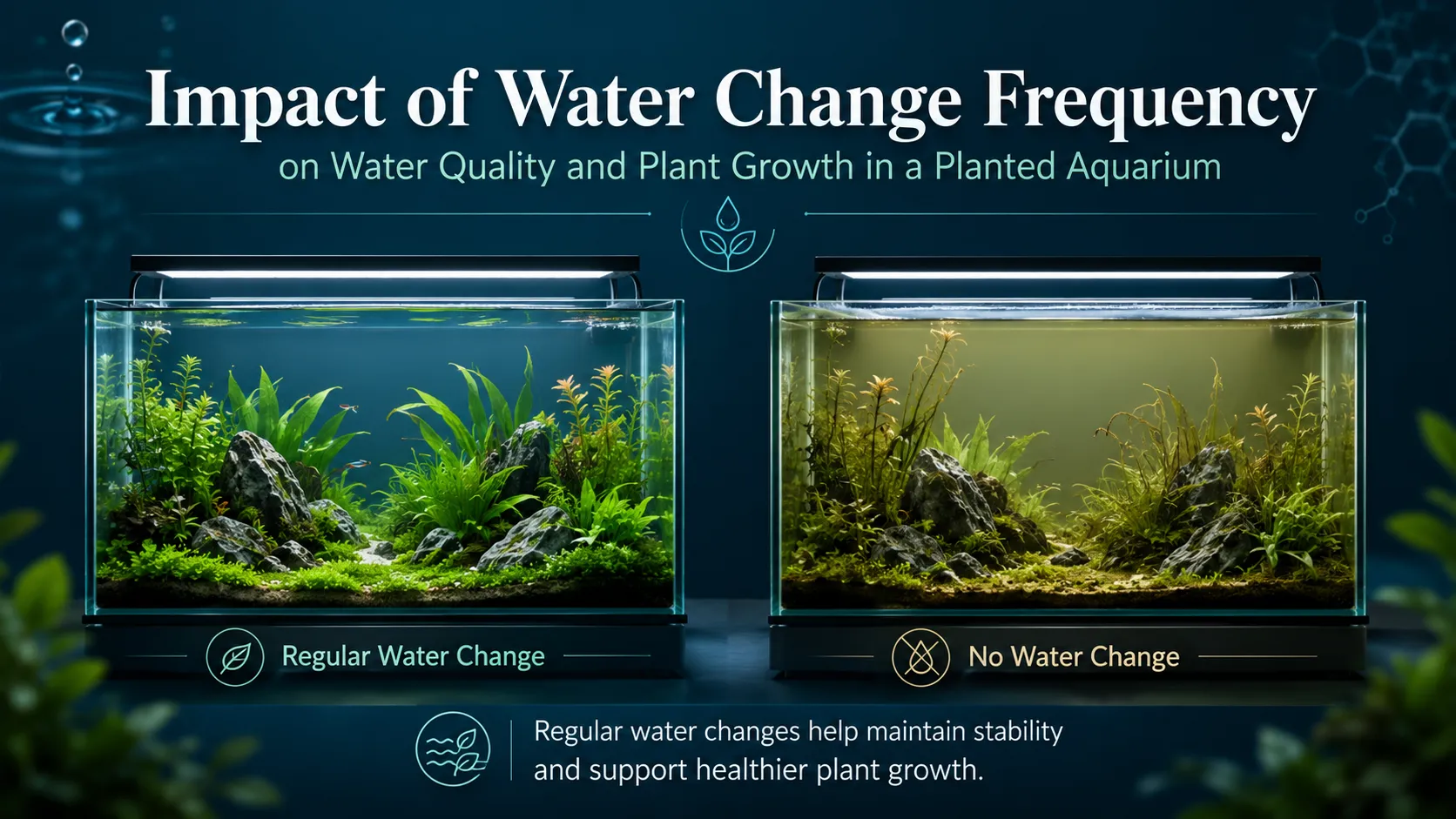
Two identical 30 cm planted tanks ran for eight weeks under matched light, feeding and filtration — one given a one-third water change every seven days, the other none at all. pH, nitrate and TDS tracked each other closely in both. Phosphate did not: it climbed from 1.55 to 4.18 mg/L without water changes, against a 3.56 mg/L peak that fell away after week 5 with them, and the untouched tank's water yellowed visibly from week 4. Brown algae and black beard algae appeared in both, at much the same time and coverage. Most plants changed little either way, though Rotala macrandra grew better in the tank receiving changes. Over eight weeks the unchanged tank did not settle into a more stable system than the maintained one. One tank per treatment (n=1), so these are descriptive trends, not statistically general conclusions.
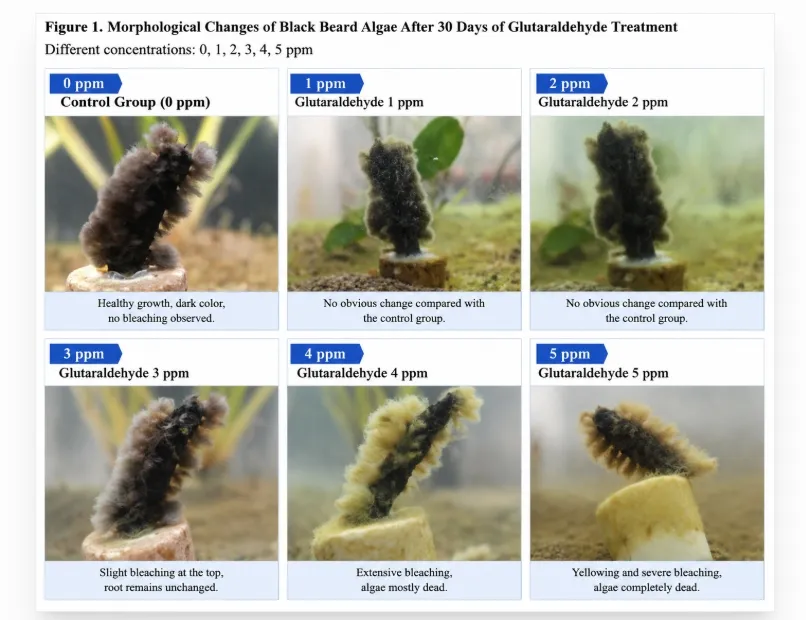
Six glutaraldehyde concentrations — 0, 1, 2, 3, 4 and 5 ppm — were dosed daily for 30 days in matched 20 L tanks holding black beard algae, three aquatic plant species and zebrafish. The algae were unchanged at 1–2 ppm, showed slight whitening at the tips at 3 ppm, and whitened and died extensively at 4–5 ppm. But Vallisneria had already yellowed slightly at 2 ppm and was obviously yellowing and decaying by 3 ppm, while Echinodorus major and Anubias showed no visible damage anywhere in the range. The dose that clears the algae and the dose a sensitive plant tolerates therefore overlap, and no safe whole-tank window emerged. One tank per concentration, no parallel replicates, and residual glutaraldehyde was never measured — these are nominal dosing concentrations and trend observations, not a dosing recommendation.
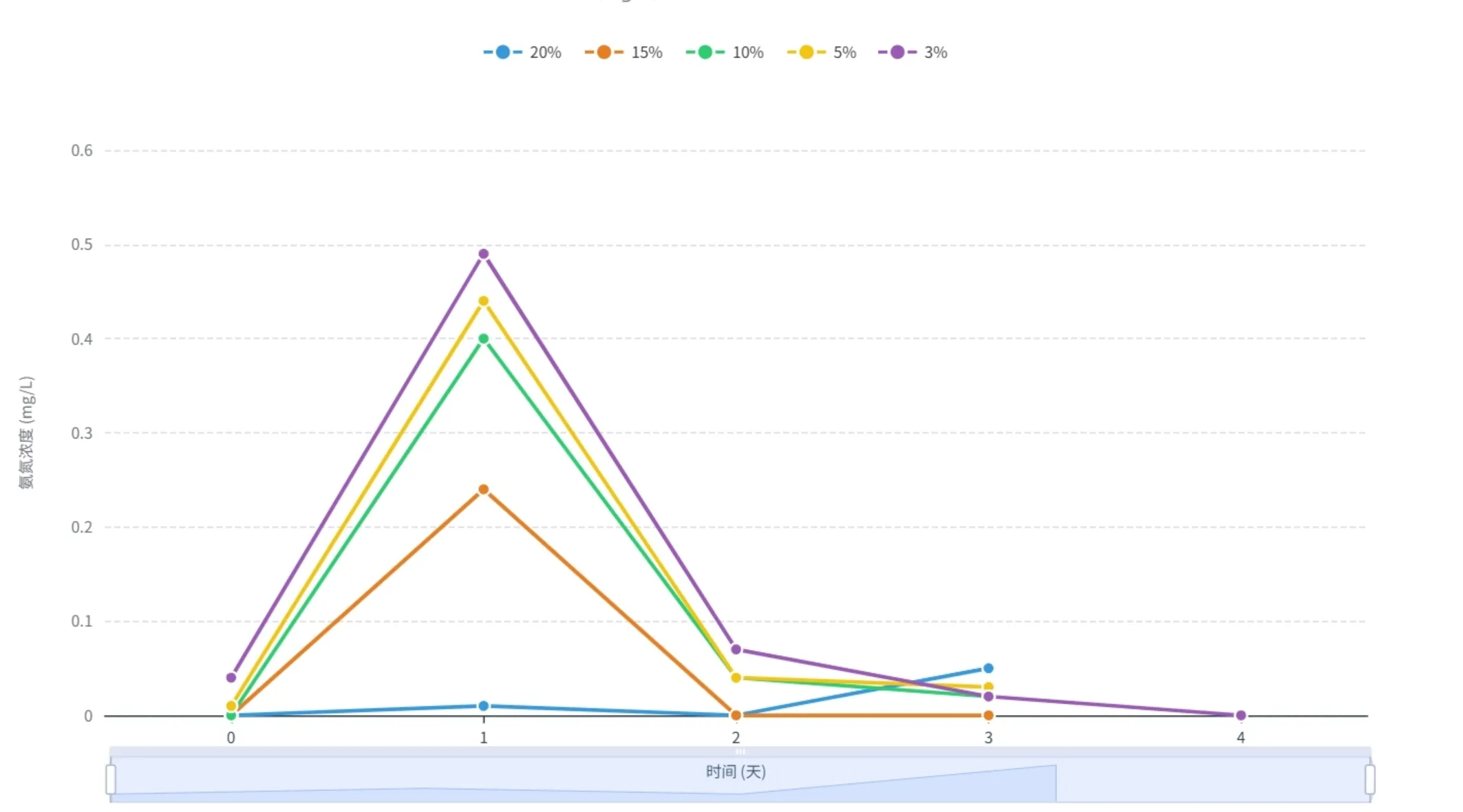
A sump-filtered 220 L aquarium stocked with 45 fish was given an 18 g overfeeding load at five filter media ratios — 20%, 15%, 10%, 5% and 3% of water volume — measuring how long ammonia nitrogen and nitrite took to return to safe values. A higher ratio lowered both peaks, but at 5% and above the differences in recovery time were limited and every group held stable nitrification; only the 3% group lagged, by roughly one day on nitrite. Each ratio was run once, in sequence in the same system with no parallel replicates, so this is a configuration guide for medium- to low-load home aquariums rather than a validated optimum.
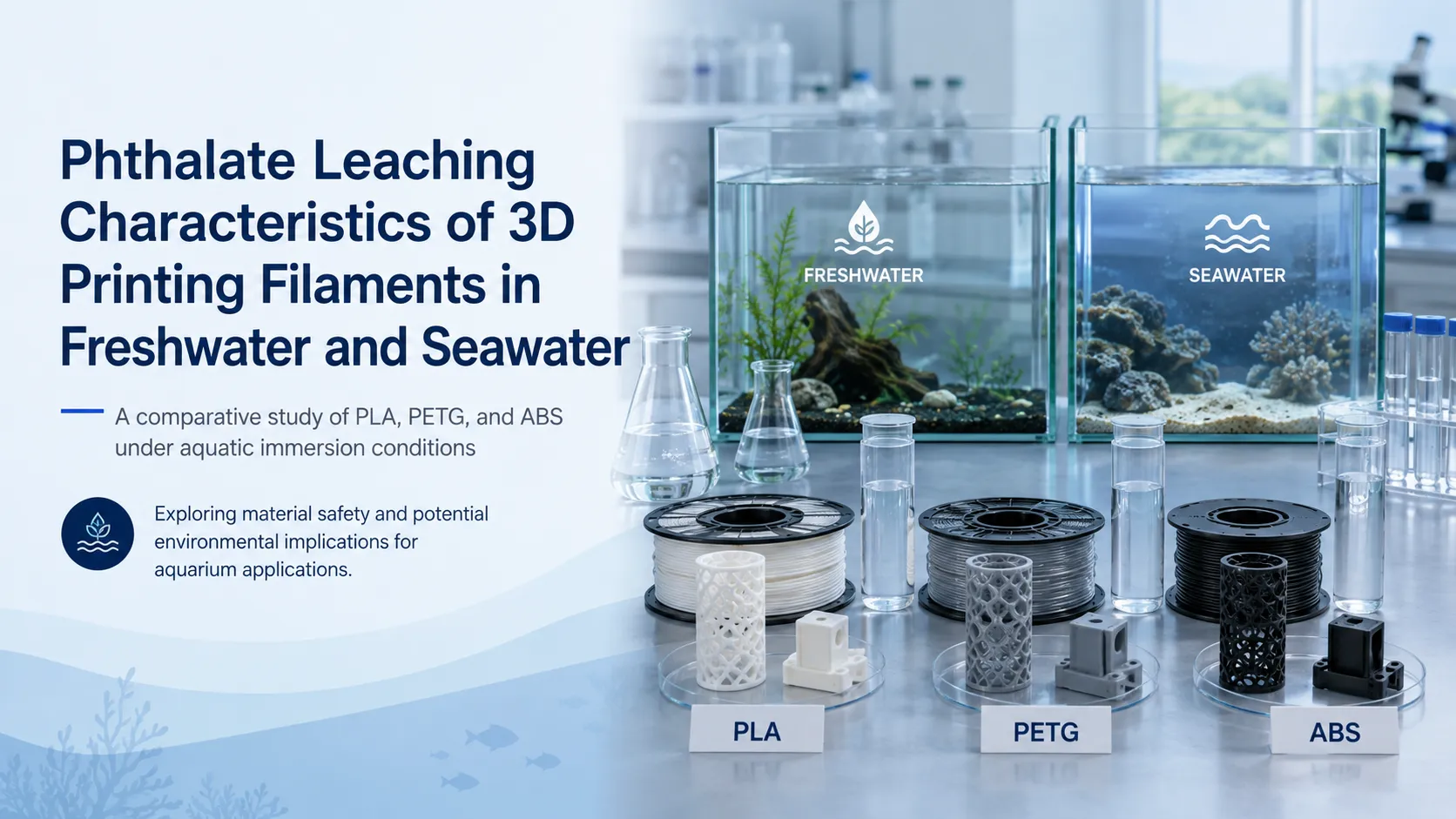
A laboratory study of phthalate leaching from three common 3D printing filaments — PLA, PETG and ABS — after 10 days of static immersion in freshwater and artificial seawater. Of the four target compounds (DMP, DEP, DBP and DOP), only DOP was detected, at 0.019–0.026 mg·L⁻¹ — including in the blank controls, which points to background contamination rather than release from the filaments. Under these short-term conditions no remarkable release of the target phthalates was observed; longer-term, multi-condition testing and further methodological validation are still required.