Abstract
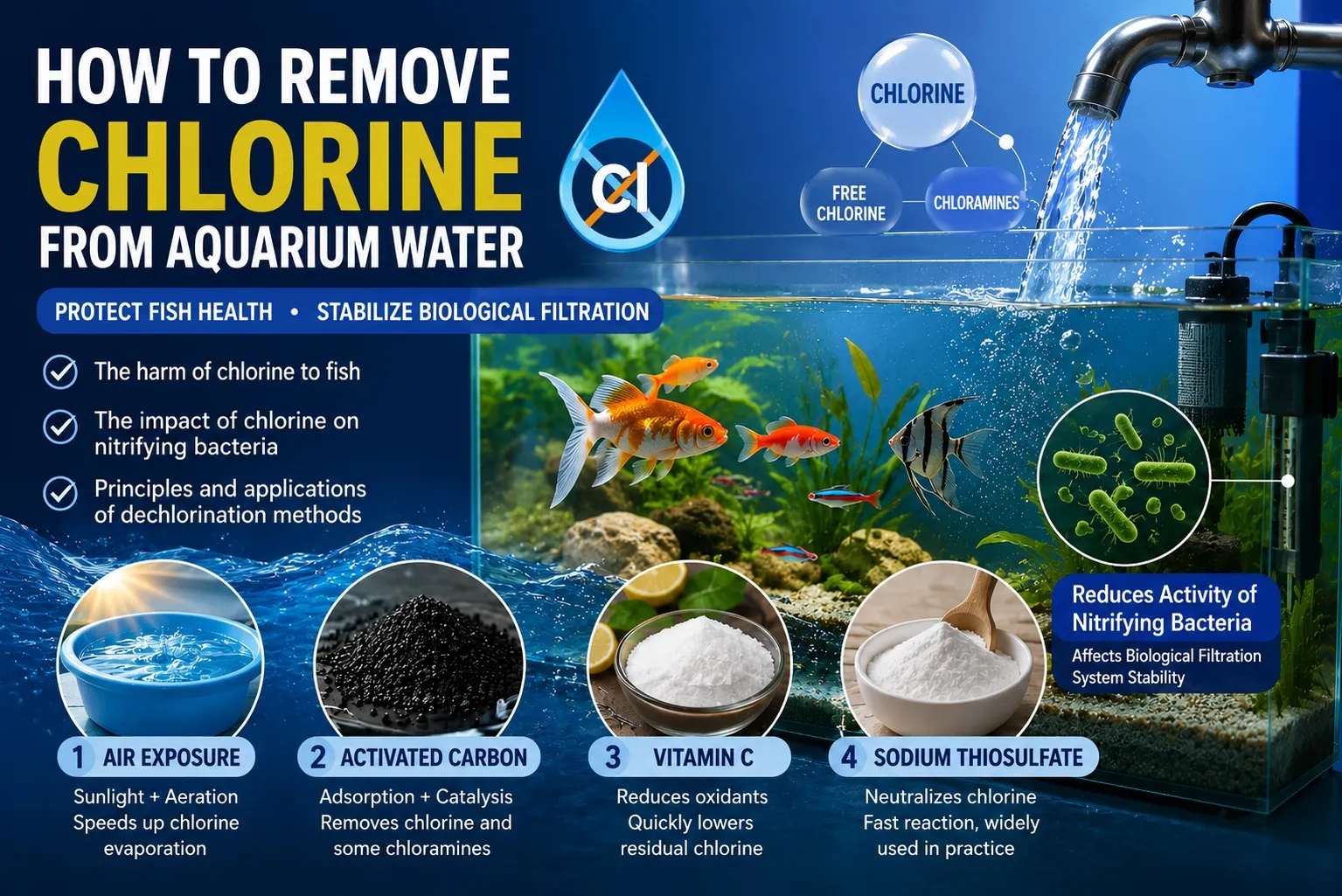
To ensure the safety of municipal water supply, water treatment plants commonly use chlorination and maintain residual chlorine levels of ≥0.3 mg/L in finished water and ≥0.05 mg/L at the end of the distribution network. This leads to residual chlorine in tap water, including free chlorine and chloramines. Residual chlorine can cause clear harm to aquatic organisms and aquarium nitrification systems. On the one hand, it may cause gill tissue hyperplasia, hemorrhage, increased mucus secretion, shortened gill filaments, and epithelial cell separation in fish. It may also lead to abnormal blood indicators, such as increased methemoglobin and decreased blood oxygen partial pressure, indicating that fish have relatively low tolerance to residual chlorine. On the other hand, residual chlorine and chloramines can inhibit nitrifying bacteria, especially ammonia-oxidizing bacteria (AOB), disrupting the stability of the nitrification system and increasing the risk of ammonia accumulation. Common methods for removing residual chlorine include: ① standing/aeration method (using aeration to accelerate the volatilization of free chlorine); ② activated carbon adsorption (removing free chlorine and part of chloramines through adsorption and surface-catalytic effects); ③ vitamin C reduction (ascorbic acid rapidly reduces residual chlorine, but dosage must be controlled); and ④ aquarium dechlorinator based on sodium thiosulfate (low cost, fast reaction, and widely used in aquarium systems). Choosing an appropriate dechlorination method is essential for protecting fish health and maintaining nitrification system function.
Introduction
Chlorine is widely used in municipal water treatment because it is inexpensive, convenient to apply, and provides reliable disinfection. To ensure microbial safety in water supply pipelines, Chinese standards require residual chlorine levels of not less than 0.3 mg/L in finished water and not less than 0.05 mg/L at the end of the distribution network. However, when this residual chlorine, including free chlorine and chloramines, enters closed aquarium systems through tap water, it may negatively affect aquatic organisms and water treatment processes.
Studies have shown that residual chlorine is strongly toxic to fish. It can directly damage fish gill tissue, causing gill filament hyperplasia, swelling, hemorrhage, excessive mucus secretion, and separation of epithelial cells from capillaries. Residual chlorine can also cause abnormal hematological indicators, such as increased methemoglobin, decreased blood oxygen partial pressure, and reduced pH, which significantly lowers the ability of fish to tolerate environmental stress. In addition, residual chlorine and chloramines can clearly inhibit nitrifying bacteria, especially ammonia-oxidizing bacteria (AOB). The nitrification system is the core process that maintains a non-toxic nitrogen cycle in aquariums. Once inhibited, ammonia or nitrite may accumulate and threaten fish health.
Therefore, effective dechlorination measures should be taken when tap water is used for water changes or top-off. Common methods include standing/aeration, activated carbon adsorption, vitamin C reduction, and aquarium dechlorinator based on sodium thiosulfate. These methods differ in convenience, reaction speed, and applicable scenarios. This article reviews the sources of residual chlorine, its effects on fish and nitrification systems, and the principles and key application points of the above dechlorination methods, providing a scientific reference for aquarium management.
1. Effects of Residual Chlorine on Fish
The histopathological response of fish to residual chlorine is mainly reflected in the gills and blood. Jiang Zhibing et al. reported that the LC50 values of residual chlorine for fish are generally low, indicating poor tolerance of fish to residual chlorine toxicity [1]. Residual chlorine can cause obvious damage to fish gill tissue, including gill tissue hyperplasia, gill filament swelling and hemorrhage, increased mucus secretion, shortened gill filaments, and edema of gill epithelial cells [2]. In addition, residual chlorine may alter hematological indicators, increasing methemoglobin, hematocrit, and lactate levels while reducing blood oxygen partial pressure and pH [3-5].
2. Effects of Residual Chlorine on Nitrifying Bacteria
Studies on drinking water distribution networks and biochemical treatment systems have shown that residual chlorine and chloramines may inhibit nitrifying bacterial activity, with ammonia-oxidizing bacteria (AOB) being particularly sensitive to oxidative disinfectants [6,7]. Based on existing research and practical aquarium experience, residual chlorine and chloramines may affect the stability of aquarium nitrification systems, especially when water changes are large, biological filtration is fragile, or system load is high. Therefore, when tap water is used for aquarium water changes, appropriate dechlorination measures are recommended to reduce potential impacts on fish and the nitrification system.
3. Methods for Removing Residual Chlorine
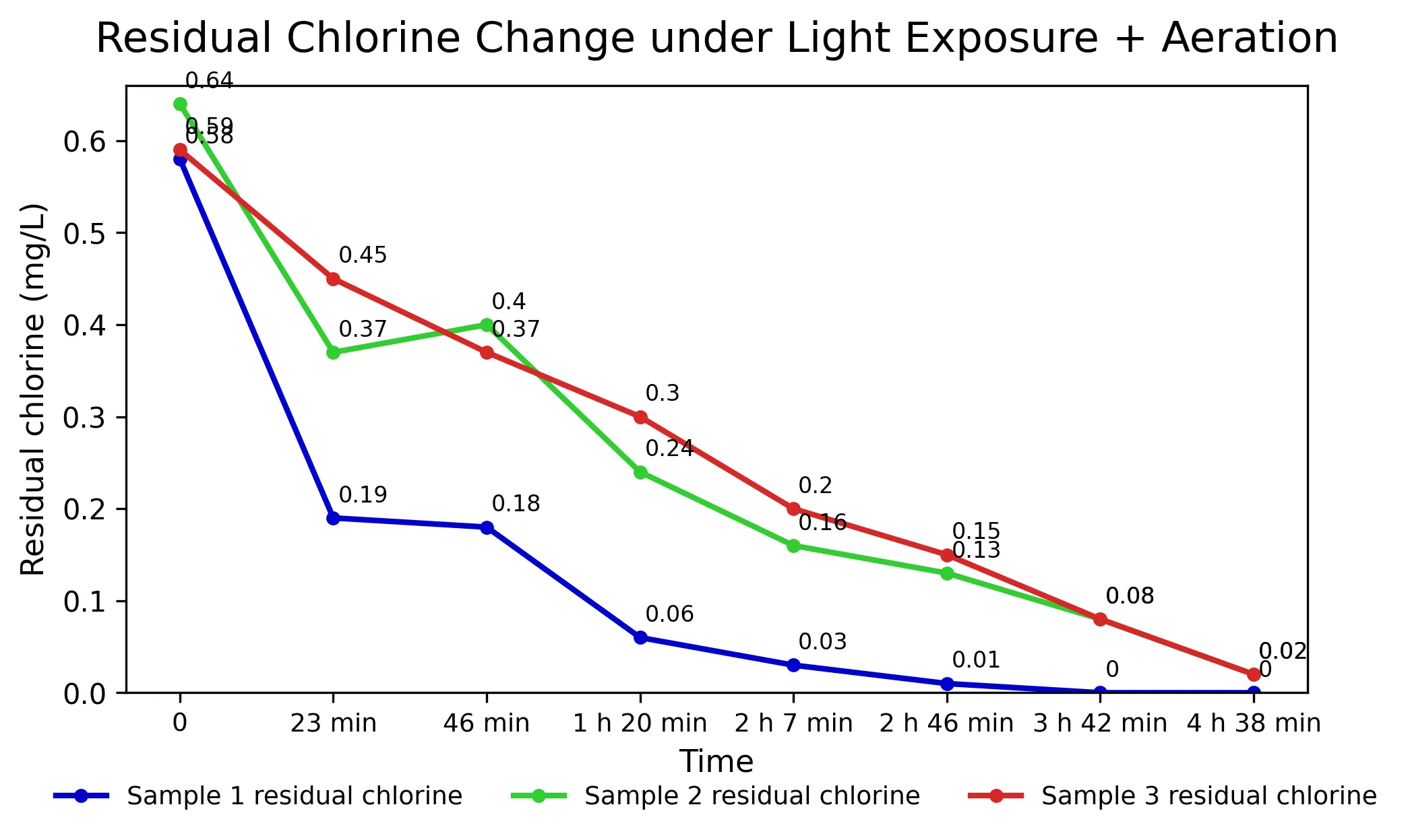
(1) Standing Method (Light Exposure + Aeration)
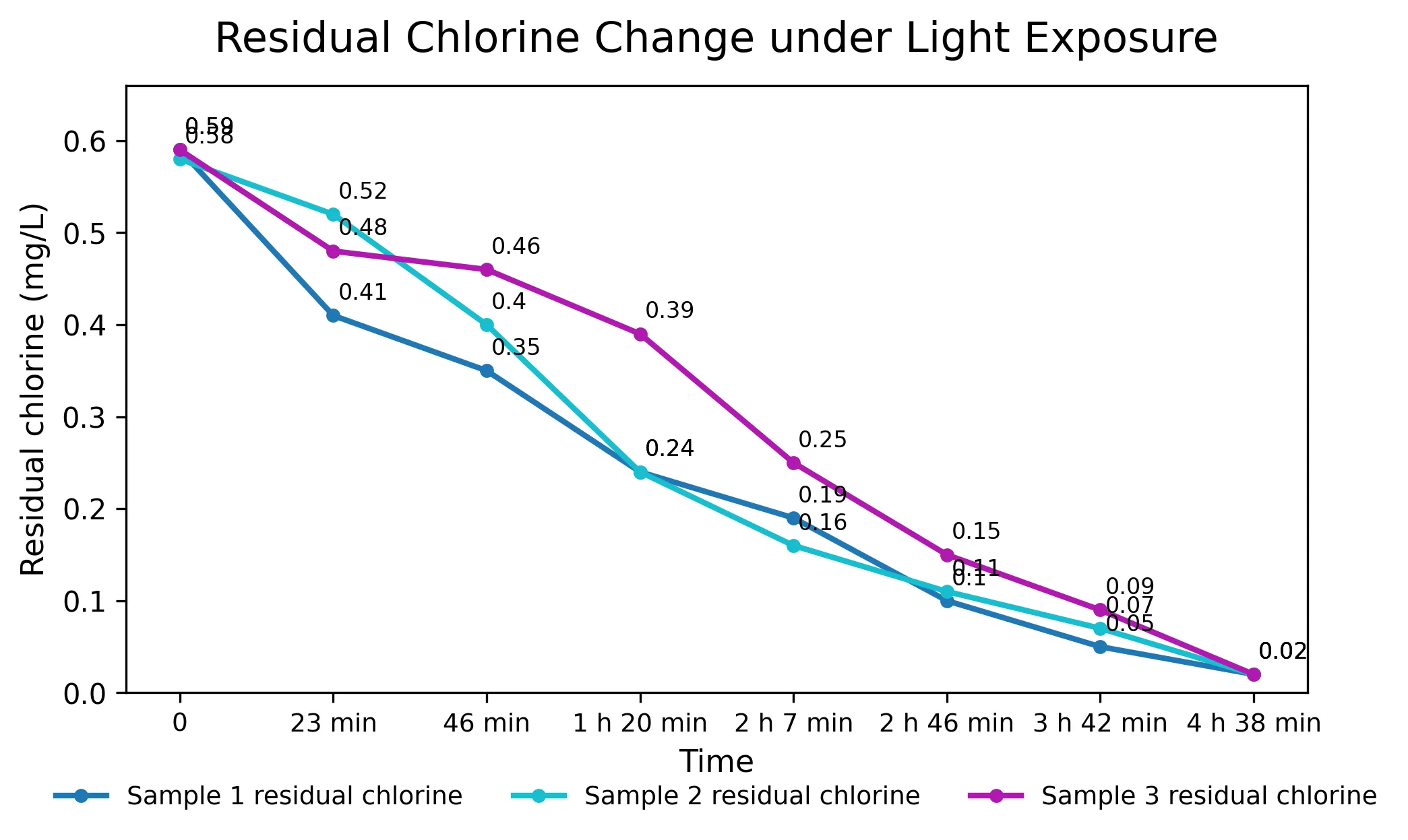
Free chlorine is volatile and can escape from water after standing. Traditional “standing water for dechlorination” mainly targets free chlorine, and its removal depends on chlorine volatilization. Aeration and increasing the contact area between water and air can accelerate the release of free chlorine. However, in areas where chloramine disinfection is used, simple standing may not fully remove residual disinfectants. Experimental conditions: At the beginning of the experiment, the indoor light intensity was approximately 68670 lx, and continuous light exposure was used for the residual chlorine decay test.
(2) Activated Carbon Method
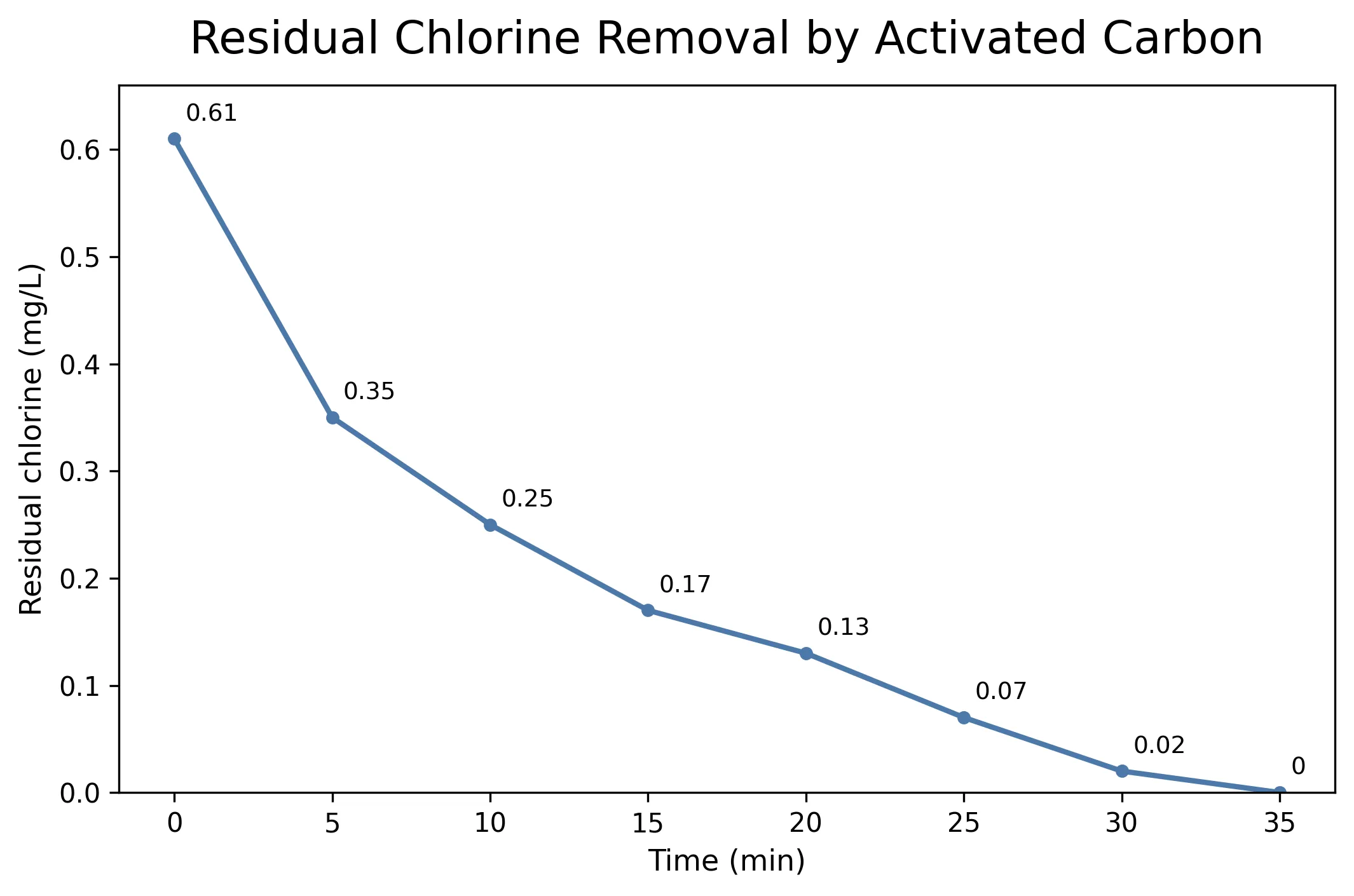
Activated carbon can reduce the concentration of free chlorine and some chloramines in water through adsorption and surface-catalytic effects. Compared with simple standing, activated carbon is more suitable for continuous water changes or large-volume water treatment. However, its treatment efficiency is closely related to contact time, flow rate, and the condition of the activated carbon.
Experimental conditions: 200 g activated carbon, 36 L water.
(3) Vitamin C Method
Vitamin C (ascorbic acid) has reducing properties and can react with free chlorine, thereby reducing the residual chlorine concentration in water. This method reacts quickly, but dosage control is still important in practical use. Excessive addition may increase the organic load of the water and is not recommended as the main long-term dechlorination method.
(4) Aquarium Dechlorinator Method (Sodium Thiosulfate)
Sodium thiosulfate is a common dechlorinating agent used in water treatment and aquarium systems. It can rapidly react with free chlorine through reduction reactions and lower residual chlorine concentration. Because it is low-cost and fast-acting, it is widely used in practical aquarium systems.
References
[1] Jiang Zhibing, Liao Yibo, Gao Aigen, et al. Research progress on the toxic effects of residual chlorine on fish[J]. Journal of Marine Sciences, 2009, 27(4):86-94.
[2] MIDDAUGH D P, CRANE A M, COUCH J A. Toxicity of chlorine to juvenile spot Leiostomus xanthurus[J]. Water Research, 1977, 11:1089-1096.
[3] MIDDAUGH D P, BURNETT L E, COUCH J A. Toxicological and physiological responses of the fish Leiostomus xanthurus exposed to chlorine produced oxidants[J]. Estuaries, 1980, 3(2):132-134.
[4] POWELL M D, PERRY S F. Respiratory and acid-base disturbances in rainbow trout blood during exposure to chloramines-T and hypochlorite[J]. Canadian Journal of Fisheries and Aquatic Sciences, 1996, 53(4):701-708.
[5] POWELL M D, HAMAN F, WRIGHT G M, et al. Response of rainbow trout to graded hypoxia following repeated intermittent exposure to chloramine-T[J]. Aquaculture, 1998, 165(1-2):27-39.
[6] Zhao Lele, Li Xing, Yang Yanling, et al. Effects of chlorine and chlorite on controlling nitrification in chloraminated drinking water distribution networks[J]. Journal of Beijing University of Technology, 2012.
[7] Zhou Lingling, Zhang Yongji, Song Zhengguo, et al. Effects of pH and temperature on nitrification in chloraminated drinking water distribution networks[J]. Environmental Science, 2011.