1 Review
Artemia has been utilized as feed for aquatic animals since the 1930s. In 1933, Seale from the United States adopted newly hatched Artemia salina nauplii as live feed for flounder larvae. Subsequently, Rollefsen and his colleagues in Norway successfully applied Artemia nauplii to fry rearing. These achievements drew extensive attention from aquaculture practitioners[1].
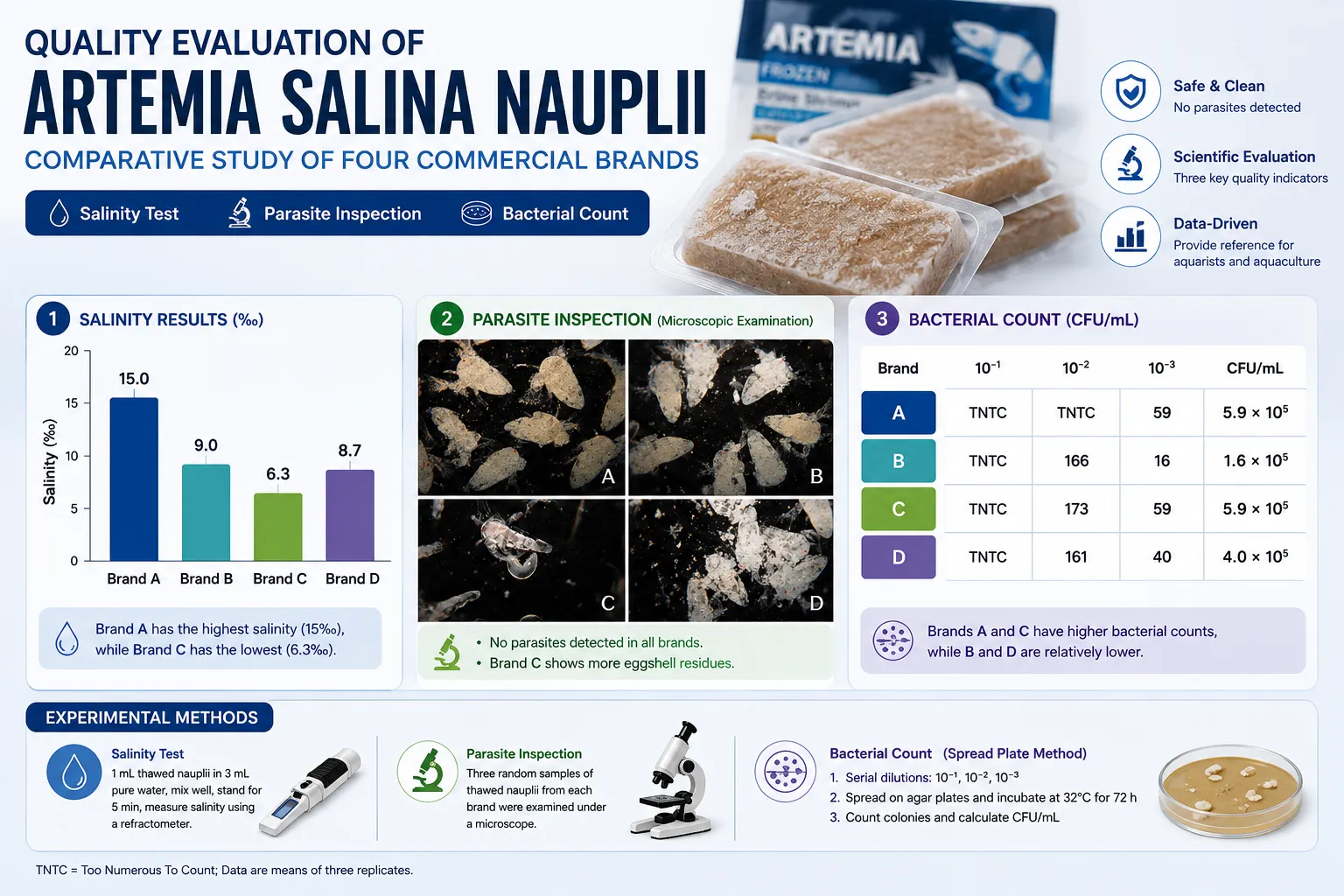
With the development of the modern ornamental aquatic industry, freeze-dried Artemia nauplii have gained widespread popularity due to their convenient application. Nevertheless, products from different brands vary greatly in quality, raising concerns among hobbyists over potential risks, such as salinity fluctuation in water bodies after feed dissolution, parasite contamination and bacterial introduction. Accordingly, this study performed a quality evaluation on commercially available Artemia nauplii from four mainstream brands via salinity measurement, microscopic parasite examination and bacterial enumeration.
1.1 Overview of Artemia salina
Artemia salina, also commonly known as brine shrimp, is a small euryhaline crustacean with a broad geographical distribution. It predominantly inhabits high-salinity water environments and is widely found in coastal salt pans and inland salt lakes across China. Taxonomically, it belongs to the phylum Arthropoda, class Crustacea, subclass Branchiopoda, and order Anostraca.
As a crucial live feed organism, Artemia salina is highly valued for its superior nutritional value and versatile applications. At present, cysts and newly hatched nauplii of Artemia remain the primary live feed sources in larval rearing systems worldwide.
Artemia nauplii have long been widely used for aquatic larval cultivation. In recent years, the utilization of its subsequent larval stages and adults has also been gradually expanding. Adult brine shrimp possess high nutritional quality, containing approximately 60% crude protein, abundant essential amino acids and polyunsaturated fatty acids. Their thin exoskeletons allow direct feeding to both juvenile and adult aquatic organisms without pre-processing, exhibiting better feeding performance than formulated feeds.
Adult brine shrimp serve as ideal feed for ornamental fish. Fresh live individuals are also applied during the acclimatization of fry and fingerlings from indoor hatcheries to outdoor culture ponds, as well as for nursing weakened fry and fingerlings after transportation. Globally, around 20 enterprises specialize in producing frozen and canned adult Artemia products. Under a stocking density of 15 g high-quality Artemia cysts per ton of water, approximately 20 kg of wet-weight adult shrimp or 2 kg of dried products can be harvested within one week. Additionally, Artemia is rich in ecdysone. Relevant experiments have verified that feeding broodstock shrimp with Artemia can accelerate their sexual maturation.
1.2 Pathogenic Risks of Artemia as Live Feed
Defoirdt et al. demonstrated that Artemia can be infected by a variety of pathogenic vibrios in aquaculture, including Vibrio harveyi, V. anguillarum, V. campbellii and V. parahaemolyticus[2]. Previous studies have reported that vibrios proliferate drastically during the hatching process of Artemia cysts. Prior to hatching, certain vibrio strains are capable of penetrating the extraembryonic membrane, colonizing inside Artemia embryos, and consequently reducing the hatching yield by 10%[3].
Artemia may carry multiple shrimp viruses such as WSSV, IMNV, HPV, MrNV and XSV, and is susceptible to infection by various pathogenic vibrios. It can also harbor and transmit EHP[4]. Given the potential of Artemia to disseminate shrimp pathogens, further research on pathogen transmission via Artemia feed is highly required. Continuous development and optimization of pathogen detection techniques will provide theoretical support for the sustainable development of aquaculture and the establishment of biosecurity systems.
1.3 Objectives and Significance of the Experiment
This study aimed to evaluate the quality of Artemia salina nauplii from four commercial brands through salinity measurement, microscopic parasite examination and bacterial enumeration. The results were used to verify whether the manufacturers’ claims of complete disinfection, sterilization and pollution-free status were credible. This work also provides scientific evidence for the selection of high-quality feed in the ornamental aquaculture industry.
2 Materials and Methods
2.1 Experimental Materials and Equipment
Refractometer, beaker, glass rod, microscope, petri dish, agar, alcohol lamp, laminar flow cabinet, glass spreader
2.2 Experimental Methods
2.2.1 Salinity Measurement
Three replicate samples of thawed Artemia salina nauplii were randomly collected from each of the four brands. A 1 mL aliquot of the sample was mixed with 3 mL pure water, shaken thoroughly and allowed to stand for 5 min. The salinity of the supernatant was then determined using a refractometer.
2.2.2 Microscopic Examination for Parasites
Three thawed nauplii samples were randomly selected from each brand and observed under a microscope to detect the presence of parasites.
2.2.3 Bacterial Enumeration (Dilution Plate Spreading Method)
- Dilution: Thawed nauplii samples were fully blended with sterile water, and serially diluted at ratios of 1:10, 1:100 and 1:1000, followed by labeling.
- Plating and incubation: Culture media were prepared in advance. Under aseptic conditions in a laminar flow cabinet, no more than 0.1 mL bacterial suspension was pipetted onto the medium surface. A glass spreader dipped in a small amount of alcohol was ignited over an alcohol lamp, and cooled for 8–10 s after the alcohol burned out. The bacterial suspension was spread evenly across the medium by rotating the petri dish. All plates were incubated at 32 °C for 72 h under sterile conditions.
- Counting: After incubation, the total number of colonies on each plate was recorded. The bacterial concentration per milliliter in the original sample was calculated accordingly.
3 Results
3.1 Salinity Determination
Table 1. Salinity levels in leachate from Artemia nauplii across four brands.
Brand | Replicate 1 (‰) | Replicate 2 (‰) | Replicate 3 (‰) | Mean (‰) |
|---|---|---|---|---|
A | 16 | 18 | 11 | 15.0 |
B | 7 | 10 | 10 | 9.0 |
C | 7 | 7 | 5 | 6.3 |
D | 9 | 8 | 9 | 8.7 |
Note: Data are means of three replicates.
3.2 Microscopic Observation of Parasites
Microscopic examination revealed that no parasites were detected in Artemia salina nauplii from all four groups. Nevertheless, a large quantity of chorion residues were distinctly observed in the samples of Brand C.
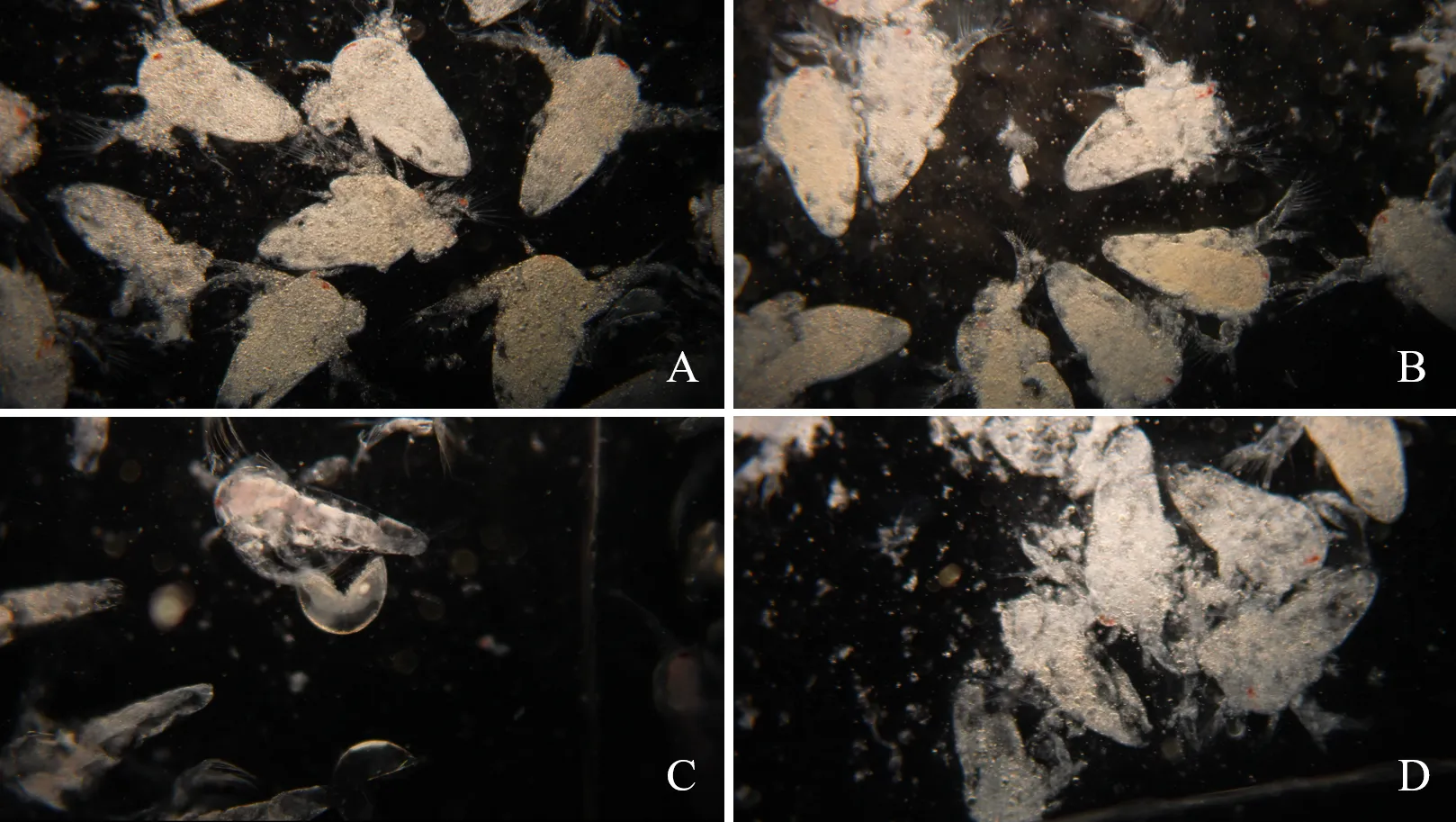
Figure 1. Microscopic view of brine shrimp
3.3 Results of Bacterial Enumeration
Table 2. Bacterial count in Artemia nauplii from four commercial brands
Brand | 10-1 | 10-2 | 10-3 | Total Bacterial Count (CFU/mL) |
|---|---|---|---|---|
A | TNTC | TNTC | 59 | 5.9×10⁵ |
B | TNTC | 166 | 16 | 1.6×10⁵ |
C | TNTC | 173 | 59 | 5.9×10⁵ |
D | TNTC | 161 | 40 | 4.0×10⁵ |
Note: TNTC = Too Numerous To Count
4 Discussion
In the present study, a comprehensive quality evaluation of Artemia salina nauplii from four commercial brands was performed through salinity determination, microscopic parasite examination, and bacterial enumeration, and significant quality differences were identified among the tested brands.
Salinity measurement results showed that Brand A exhibited the highest average salinity (15‰) among all samples, which may be attributed to salt retention during product processing. In contrast, Brand C presented the lowest salinity value (6.33‰). Combined with the intuitive morphological observation of blank ice layers in Brand C samples, the low salinity was speculated to result from a high water content. The solid–liquid ratio of 1:3 adopted in this experiment was far lower than the dilution ratio applied in practical aquaculture. Accordingly, the salinity fluctuation in aquaculture water caused by the dissolution of commercial Artemia nauplii is negligible under actual breeding conditions, which alleviates the salinity-related concerns of aquatic hobbyists.
No parasites were detected in microscopic examinations for all four brands, indicating that all products met the basic sanitary control standards. However, excessive chorion residues were observed in Brand C samples, which was likely caused by incomplete processing procedures and may reduce the digestive efficiency of aquatic animals when feeding.
Bacterial enumeration revealed that Brand A and Brand C harbored relatively high bacterial loads (5.9×10⁵ CFU/mL), which may increase the risk of pathogenic outbreaks in aquaculture systems. Although Brand B and Brand D showed slightly lower bacterial concentrations, their bacterial levels were in the same order of magnitude as those of Brand A and C with no significant differences. This finding indicates that despite standardized disinfection and sterilization treatments during production, the quality of commercial Artemia nauplii is still vulnerable to uncontrollable factors during storage and transportation.
Several limitations of this study should be acknowledged. First, the limited sample size (n=3) may introduce minor deviations in experimental results. Second, the plate counting method only quantified cultivable bacteria and failed to characterize the overall microbial community of the products. Future research can expand the sample scale, supplement nutritional component analysis, and conduct practical breeding verification tests to establish a more comprehensive and systematic quality evaluation system for commercial Artemia salina nauplii.
5 References
[1]Seale. A.1933. Brineshrimp(Artemia) as satisfactory live food for fishes .Trans. Am. Fish. Soc, 63 :129-130
[2]DEFOIRDT T,CRAB R,WOOD T K,et al. Quorum sensing-disrupting brominated furanones protect the gnotobiotic brine shrimp Artemia franciscana from pathogenic Vibrio harveyi,Vibrio campbellii,and Vibrio parahaemolyticus isolates[J]. Applied and environmental microbiology,2006,72(9):6419-6423.
[3]QUIROZ-GUZMÁN E,BALCÁZAR JOSÉ L,VÁZQUEZ-JUÁREZ R,et al. Proliferation,colonization,and detrimental effects of Vibrio parahaemolyticus and Vibrio harveyi during brine shrimp hatching[J]. Aquaculture,2013,406/407:85-90.
[4] Wang Y T, Shi C Y, Sui L Y, et al. Research progress on the risk of shrimp pathogen transmission via brine shrimp as live feed[J]. China Animal Health Inspection, 2020, 37(11): 61-67.